Warm White vs Cool White: Which Colour Temperature?
Warm white (about 2700K to 3000K) gives a soft, slightly yellow light that suits living rooms, bedrooms and dining areas, while cool white (about 4000K), sometimes called natural white, gives a crisper, whiter light that suits kitchens, laundries, bathrooms and work areas. Whichever you choose, keep the same colour temperature within each room or open-plan space.
What does colour temperature mean?
Colour temperature describes how warm (yellow) or cool (blue-white) a light looks. It is measured in kelvin (K) and printed on LED globe packaging and fitting specifications. Lower numbers are warmer; higher numbers are cooler. Colour temperature has nothing to do with how hot the globe gets, and it is separate from brightness, which is measured in lumens.
| Name | Colour temperature | How it looks |
|---|---|---|
| Extra warm | About 2200K to 2700K | Amber, candle-like glow, common in filament-style globes |
| Warm white | About 2700K to 3000K | Soft, cosy, similar to old incandescent globes |
| Cool or natural white | About 4000K | Clean, neutral white |
| Daylight | About 5000K to 6500K | Very white, slightly blue |
Which colour suits each room?
There is no single right answer, but these choices work in most Australian homes.
| Room | Common choice | Why |
|---|---|---|
| Living and family rooms | Warm white (3000K) | Relaxing and flattering in the evening |
| Bedrooms | Warm white (2700K to 3000K) | Helps the room feel calm at night |
| Dining | Warm white (2700K to 3000K) | Makes food and faces look good |
| Kitchen | Warm white or cool white | Warm for open-plan homes, cool for a crisp, bright look |
| Bathroom | Warm or cool white | Cool shows detail at the vanity; warm feels more relaxing |
| Laundry | Cool white (4000K) | Clear light for a work area |
| Study or home office | Cool white (4000K) | Crisp light for reading and screen work |
| Garage and workshop | Cool white or daylight | Maximum clarity for tasks |
| Outdoor and garden | Warm white | Softer and less harsh to neighbours; cooler light for security floodlights |
Is 3000K or 4000K better for a kitchen?
It depends on how the kitchen connects to the rest of the house. In an open-plan kitchen that flows into a warm white living area, 3000K keeps the whole space consistent. In a separate kitchen, or if you prefer a bright, clean look with white cabinetry, 4000K works well. If you cannot decide, a tricolour fitting lets you try both before you commit.
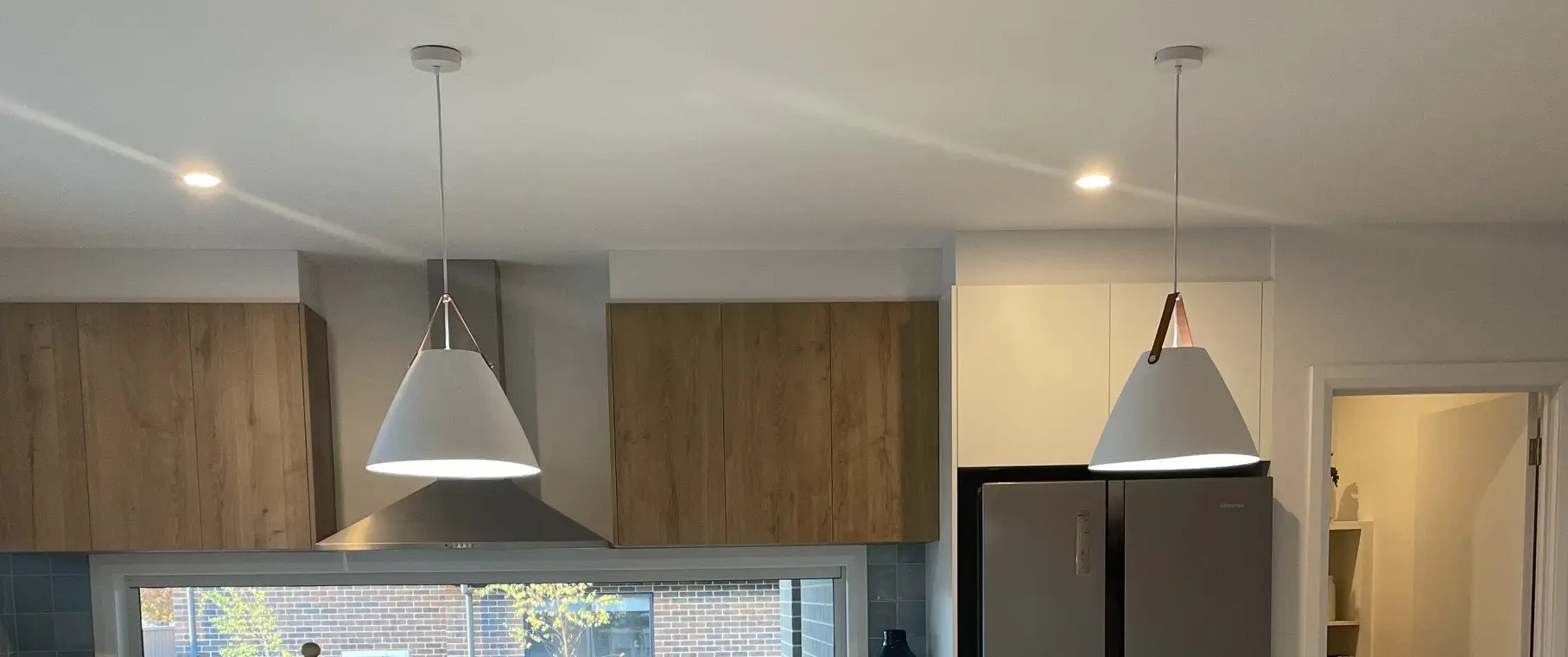
Pendants over the island can also be warmer than the downlights if they are on a separate switch and used mainly for mood lighting.
What is a tricolour (CCT) LED?
Tricolour LEDs, also called CCT switchable, have a small switch on the fitting or driver that sets the colour to warm white, cool white or daylight. They are common in downlights and oyster lights. The benefit is flexibility: you can choose the colour once the room is finished, or change your mind later.
The catch is consistency. The switch is usually set when the fitting is installed, so make sure every fitting in a room is set to the same colour. Some smart globes and fittings let you change colour from an app instead.
How do you avoid mismatched lights?
Mismatched colour is one of the most common lighting problems in a home, and it is usually easy to prevent. It happens when globes are replaced one at a time from different shops, when tricolour fittings are set differently, or when two brands of downlight labelled with the same kelvin rating look slightly different side by side.
- Pick one colour temperature for each room, and for each open-plan space as a whole.
- When replacing a globe, bring the old one in so the colour can be matched.
- Buy the same brand and range for rows of downlights where possible, as colour can vary slightly between brands.
- Check tricolour fittings are all set the same way before the electrician leaves.
- Replace globes in a cluster or pendant group together if the colours no longer match.
Does colour temperature affect sleep or mood?
Many people find warm light more relaxing in the evening and cooler light more energising during the day, which is one reason warm white is the usual choice for bedrooms and living areas. If you want both, dimmable fittings, lamps on separate switches or smart globes that change colour let you use brighter, cooler light for tasks and softer, warmer light later at night.
For children's rooms and night lights, low-output warm light is the gentlest choice, as it helps little ones settle without lighting up the whole room.
What else affects how light looks?
Colour rendering (CRI) describes how accurately a light shows colours. A CRI of 90 or above makes skin tones, food and timber look natural, and is worth looking for in kitchens, bathrooms and living areas. Wall and ceiling colours also change the result: warm light on grey walls can look muddy, while cool light on warm timber can look flat. Seeing lights in person is the best way to judge.
See the difference in Albury
At Lighting Bonanza, on the corner of Dean and David Streets, Albury, fittings are lit on display so you can compare warm and cool white side by side. Bring your old globe or a photo of the room and our team will help you choose, and we keep a large range of LED, smart and specialty globes on hand.
Frequently asked questions
Is warm white or cool white better?
Neither is better everywhere. Warm white (about 3000K) suits living areas and bedrooms, and cool white (about 4000K) suits kitchens, laundries and work areas.
What is the difference between 3000K and 4000K?
3000K is warm white, a soft and slightly yellow light. 4000K is cool or natural white, a crisper, neutral white light.
What is a tricolour LED?
A tricolour or CCT LED has a switch that sets the light to warm white, cool white or daylight, so one fitting can produce any of the three.
Can I mix warm white and cool white in the same room?
It is best not to. Mixed colours in one room or open-plan space look patchy. If you must, keep them on separate switches.
Which colour is best for bedrooms?
Warm white, around 2700K to 3000K, is the usual choice because it feels calm and relaxing at night.
Match your globes and fittings
Bring your old globe or a photo of the room to our Albury showroom and compare colours side by side.