The short answer
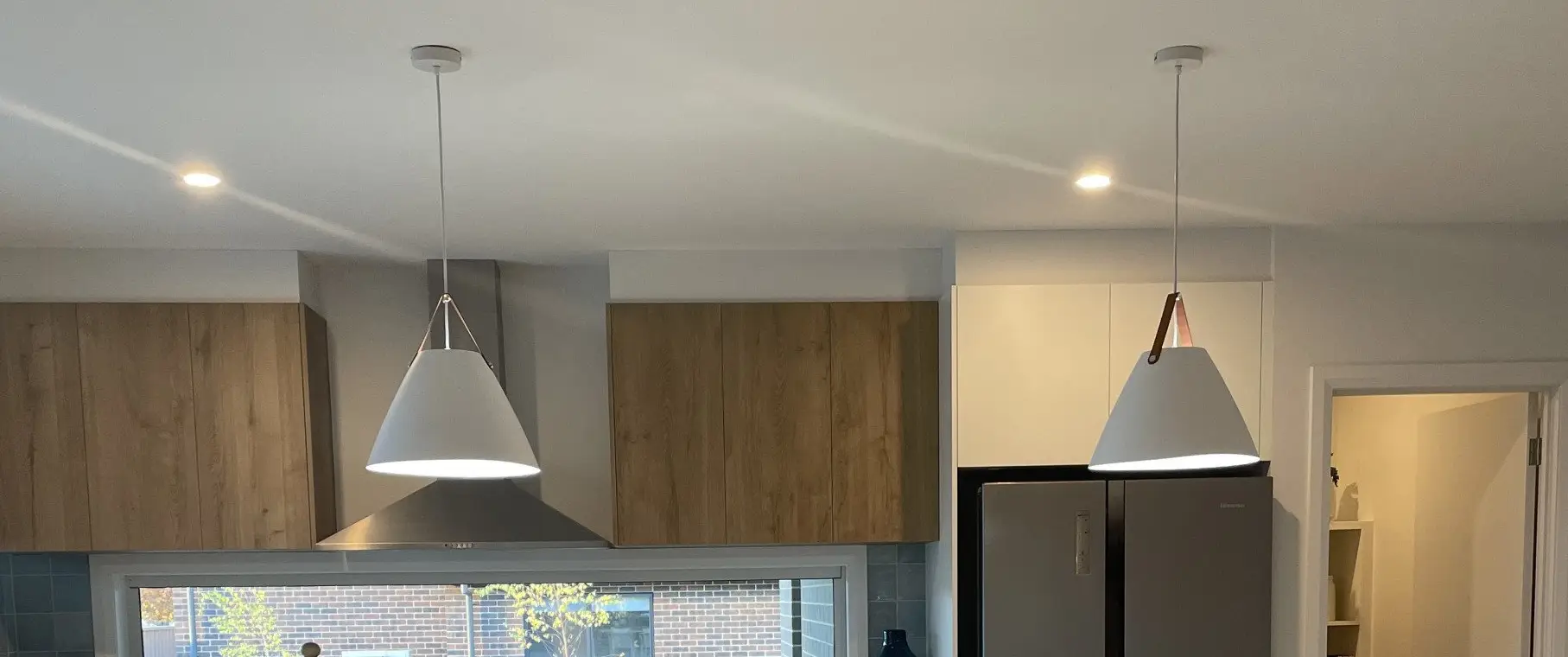
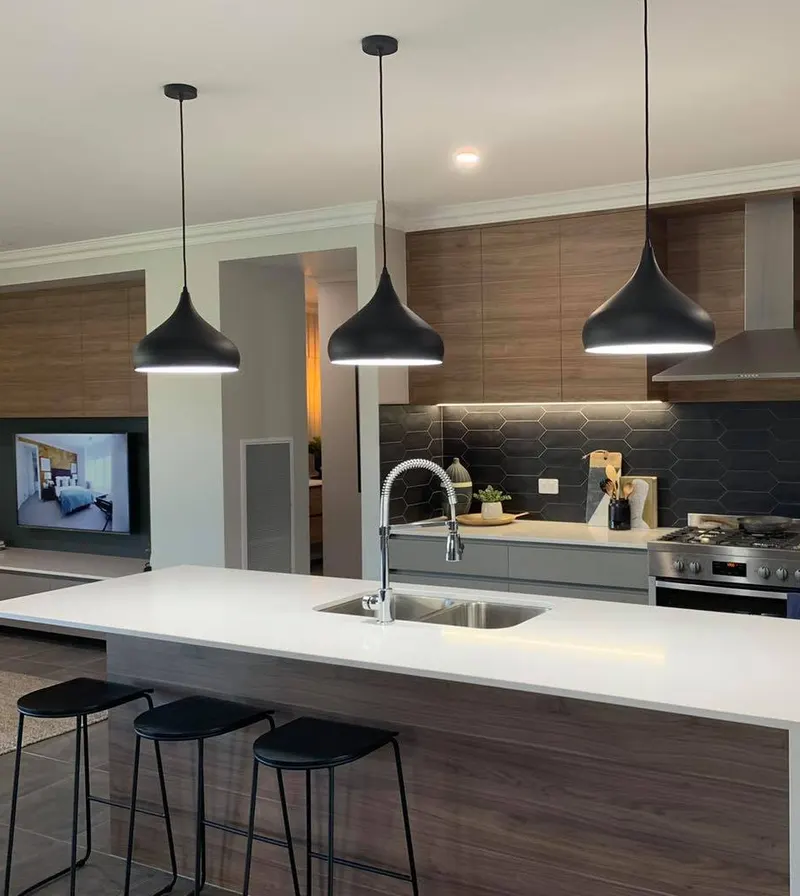
Hang pendant lights over a kitchen island so the bottom of each pendant sits about 750mm to 900mm above the benchtop, and allow roughly 600mm to 750mm between pendants. Over a dining table, aim for 750mm to 850mm above the table surface, with a pendant or linear bar about half to two-thirds the width or length of the table.
Quick reference: pendant heights
All measurements are to the bottom of the pendant. Adjust within the range for your ceiling height, the size of the pendant and the height of the people using the space.
| Location | Height guide | Notes |
|---|---|---|
| Kitchen island or bench | 750mm to 900mm above the benchtop | Higher for tall users or large pendants |
| Dining table | 750mm to 850mm above the table | Low enough to light the table, high enough to see across it |
| Entry, hallway or walkway | At least about 2.1m above the floor | Keep head clearance where people walk underneath |
| Stairwell or void | Bottom clear of head height from every step | Often hung in the upper part of the void |
| Bedside | Around shoulder height when sitting up in bed | Frees up the bedside table |
Interactive tool
Pendant planner
Enter the length of your island or table to work out how many pendants to use, where they go and how high to hang them.
Our suggestion
How high should pendants hang over a kitchen island?
The 750mm to 900mm rule keeps pendants low enough to light the bench and create a focal point, but high enough that they don't block views across the kitchen or hit anyone's head. If the cook is tall, or the pendants are large and solid, go towards 900mm. If the pendants are small or open, and the ceiling is standard height, 750mm to 800mm often looks better.
Sit at the island and stand at it before the electrician fixes the height. Many pendants have adjustable cords, but it's easier to get the cord length right at installation than to shorten it later.
How far apart should island pendants be?
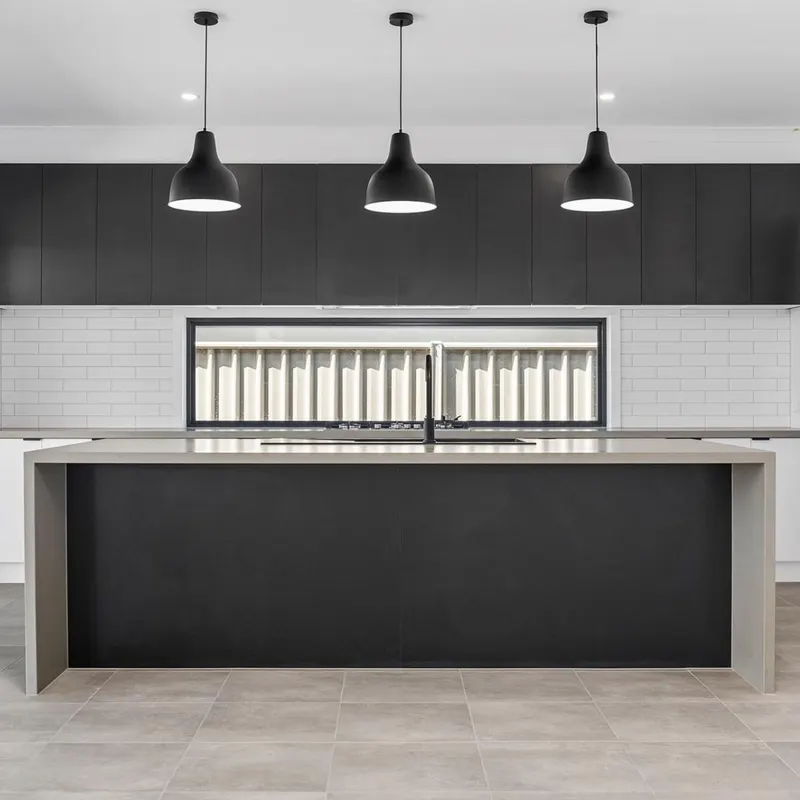
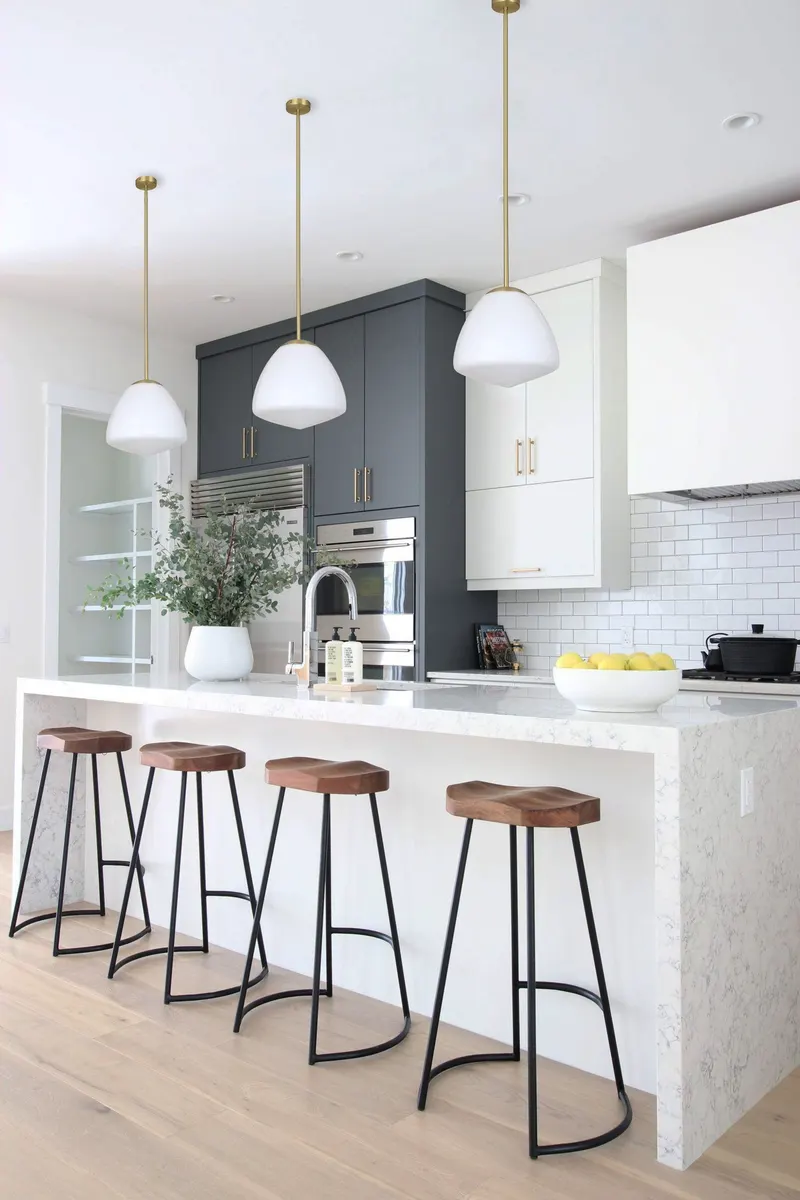
Allow about 600mm to 750mm between the edges of neighbouring pendants for most sizes, and more for large pendants. Keep the outer pendants roughly 150mm to 300mm in from each end of the island so the light falls on the bench, not the floor.
A simple way to plan: measure the island length, take off the end allowances, then divide the remaining space evenly between the pendants. Mark the positions on your plan so the electrician runs the cabling to the right spots before the ceiling goes up.
How many pendants over an island?
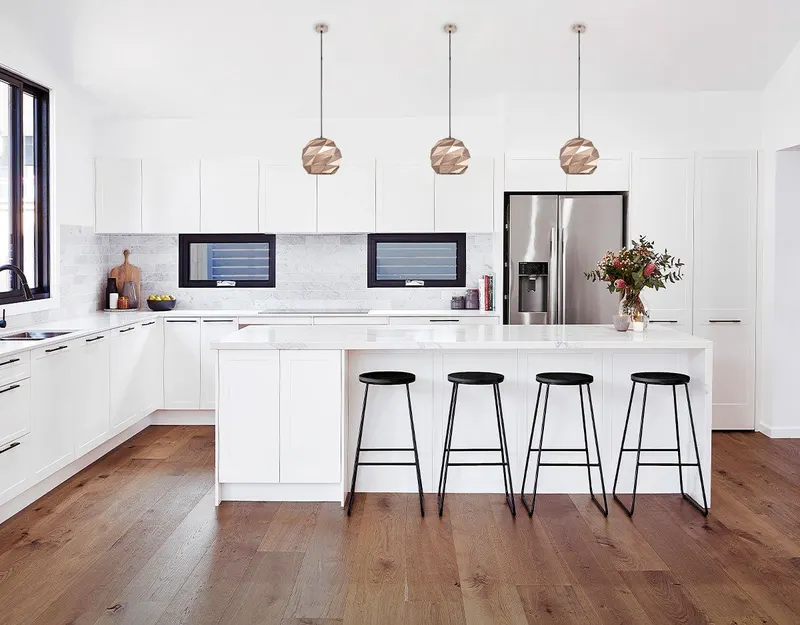
Odd numbers are traditional, but two pendants often suit shorter islands better than three cramped ones. Use this as a starting point, then adjust for the size of the pendants.
| Island length | Typical pendant arrangement |
|---|---|
| Up to about 1.5m | One large pendant or two small pendants |
| About 1.5m to 2.4m | Two medium pendants or three small pendants |
| About 2.4m to 3.0m | Three pendants, or one linear pendant |
| Over about 3.0m | Three or four pendants, or a long linear pendant |
How big should a pendant be?
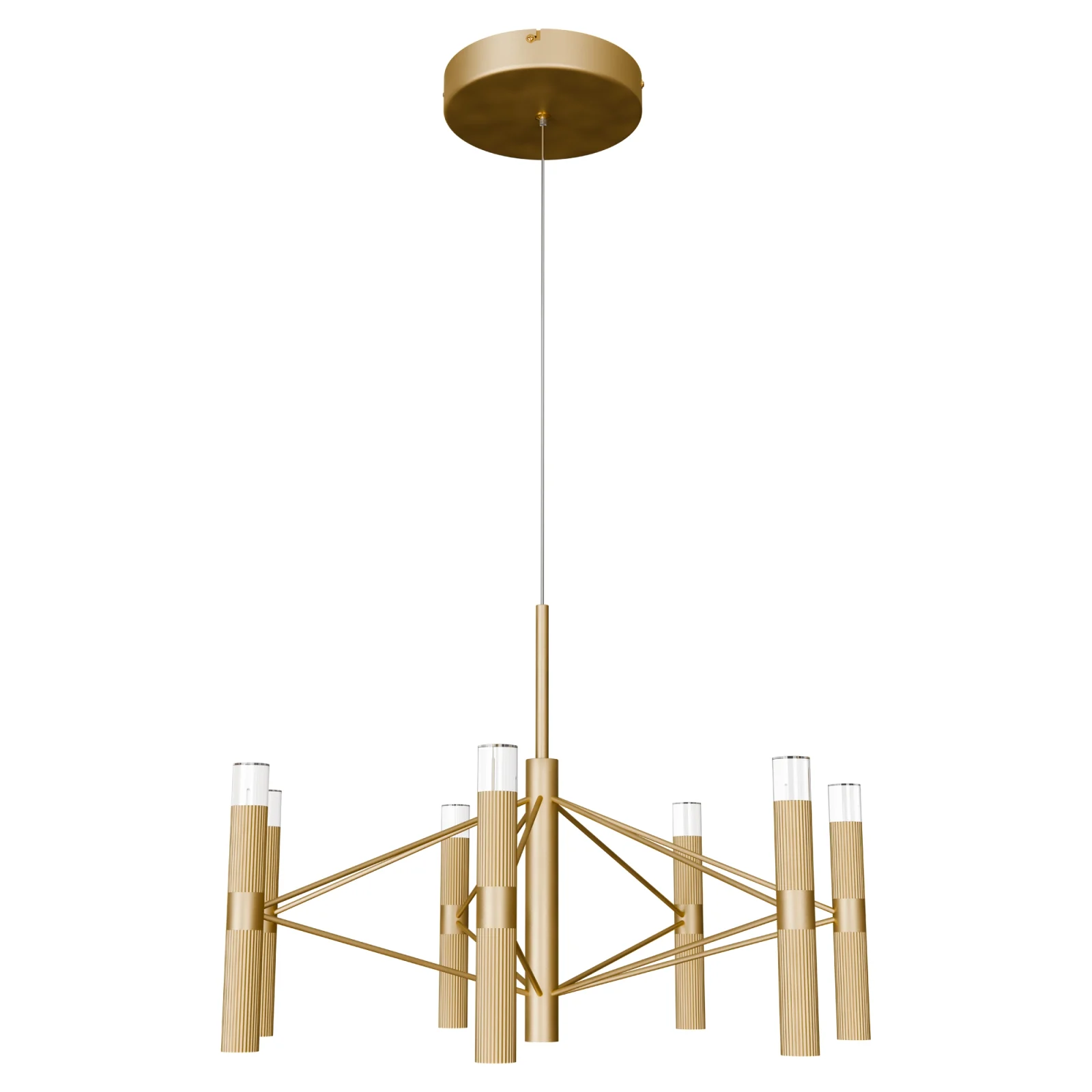
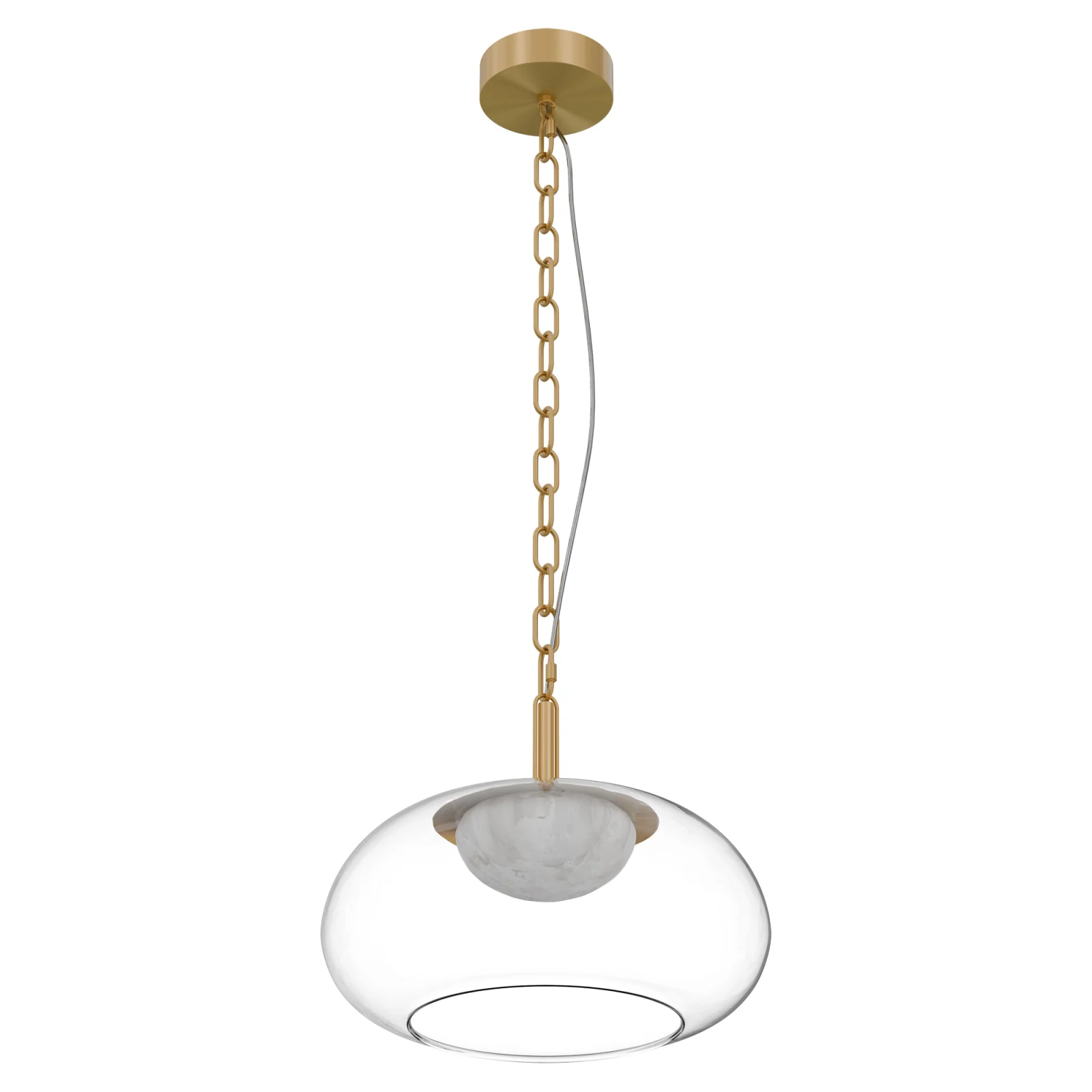
A quick check for a single statement pendant over an island or table is that its diameter is roughly one third to one half of the width of the surface below it. For a group, add up the widths of the pendants and the gaps: the total should leave clear space at each end of the island.
A pendant can look much bigger or smaller in a photo than it does in real life. Seeing them hung in a showroom is the easiest way to judge scale.
How high should a pendant hang over a dining table?
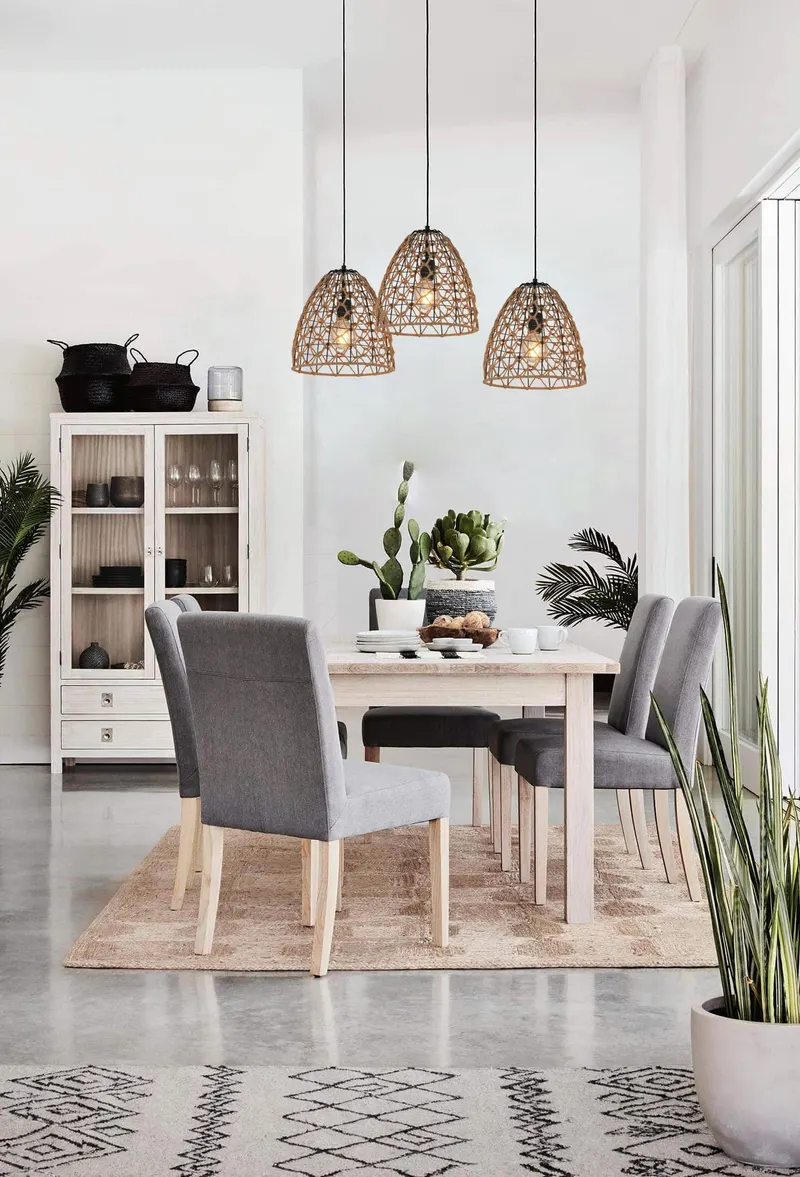
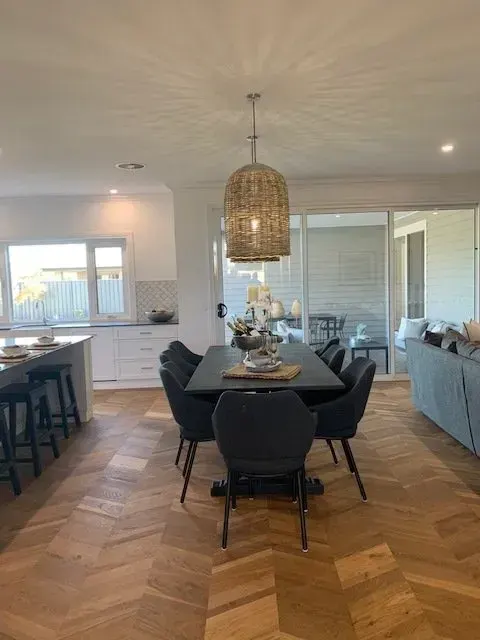
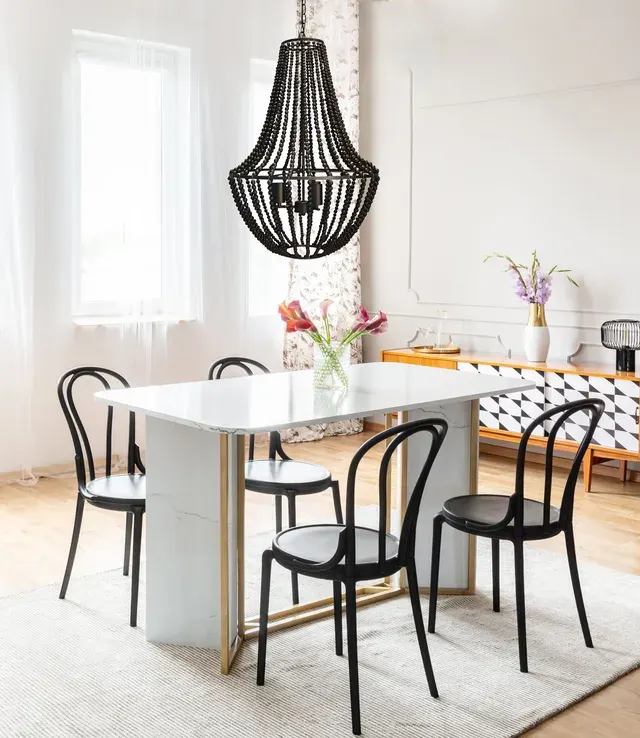
Aim for 750mm to 850mm between the tabletop and the bottom of the pendant. That lights the table without glare in people's eyes and still lets diners see each other. Centre the light over the table rather than the room, because the table is what you're lighting.
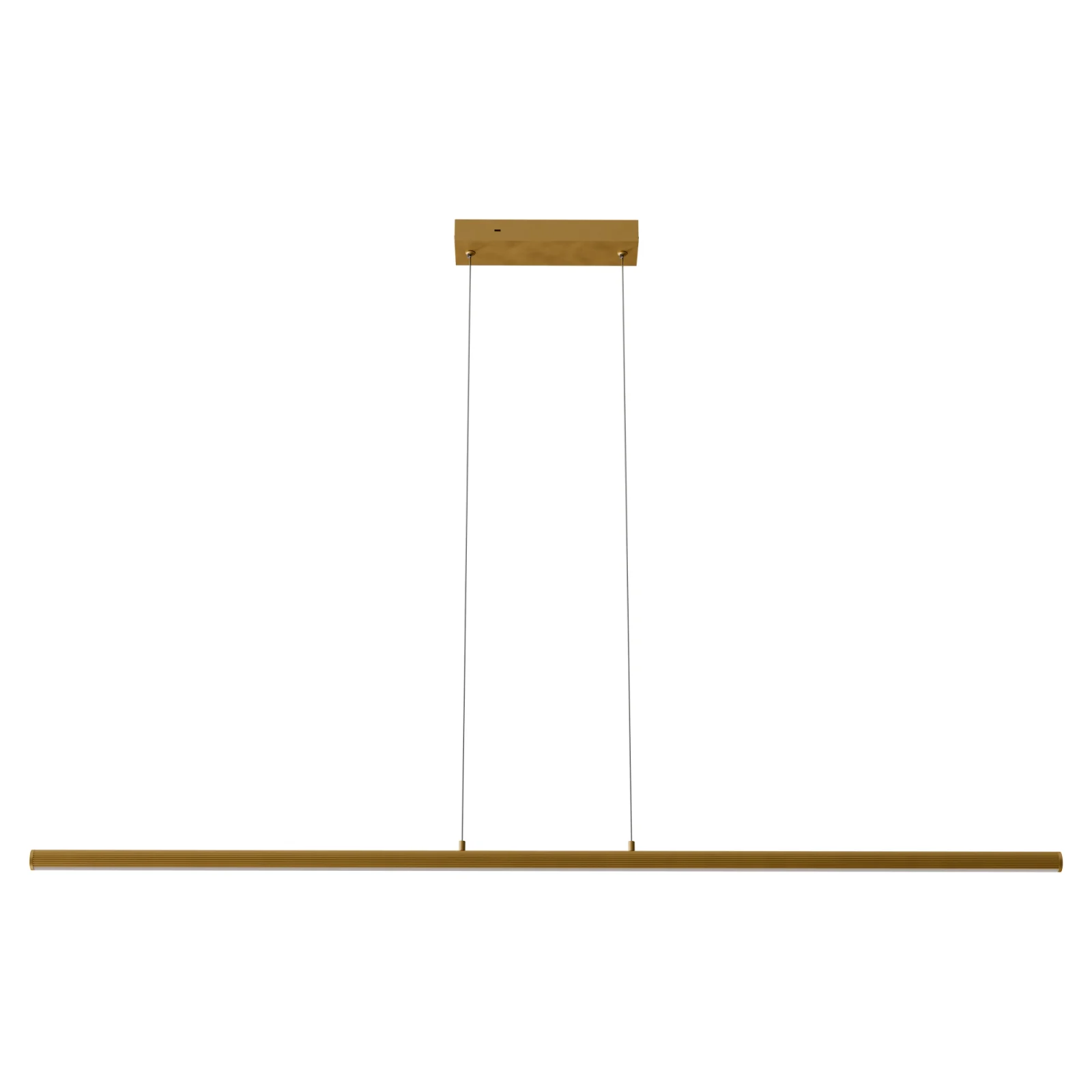
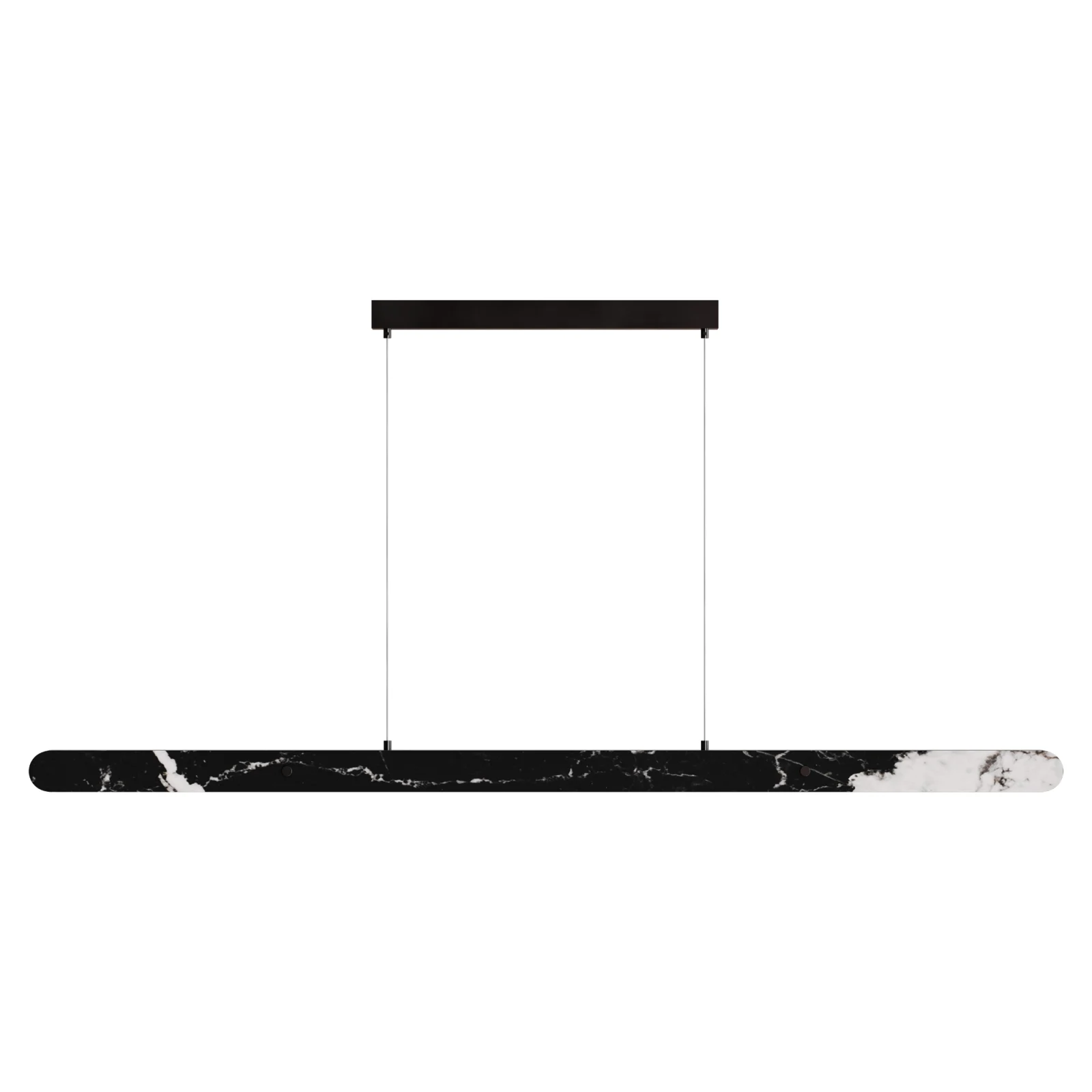
For a rectangular table, a linear pendant or two to three pendants in a row works well; the fitting should be about half to two-thirds the length of the table. For a round table, a single larger pendant or a cluster suits best. If you may move the table, ask your electrician about a ceiling hook or offset canopy so the light can follow it.
What about stairwells, voids and high ceilings?
In a stairwell or double-height void, keep the bottom of the pendant clear of head height from every step, not just the floor below. Long drops and clusters of pendants at staggered heights are common in voids and look best when viewed from both levels.
With high ceilings over an island or table, keep the same height above the surface; the extra drop simply goes into a longer cord or rod. Check the maximum drop of the pendant before you buy, as some have fixed or limited lengths.
Which globe and light colour suits a pendant?
Warm white, around 2700K to 3000K, suits most kitchens with pendants and almost all dining areas, and it matches most warm white downlights. If your kitchen downlights are cool white, choose the same colour for the pendants or put them on a separate switch so you can use them for mood lighting. Many pendants take standard E27 or B22 globes, which makes it easy to change the look, and filament-style LED globes suit open or clear-glass pendants. Put pendants on a dimmer if you want them to double as mood lighting, and choose dimmable globes to match.