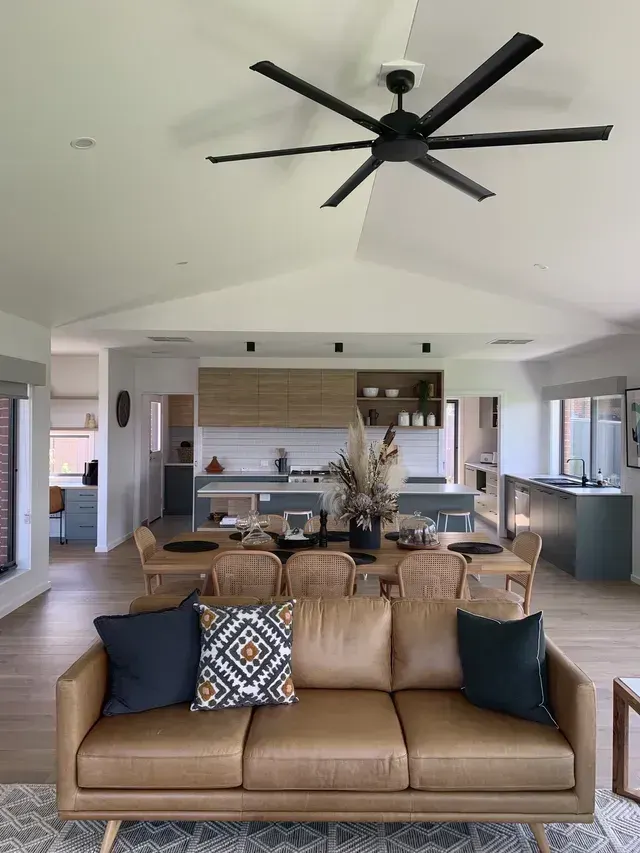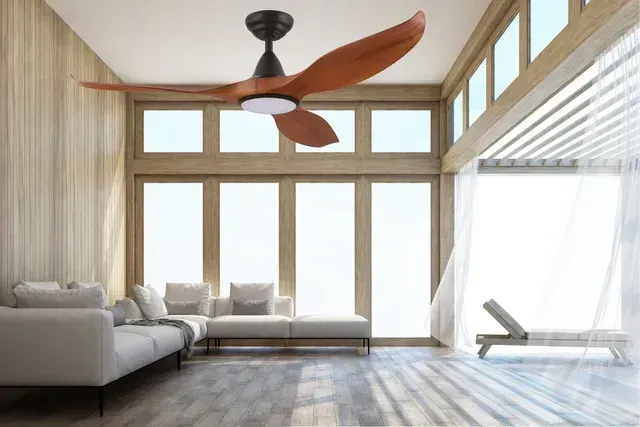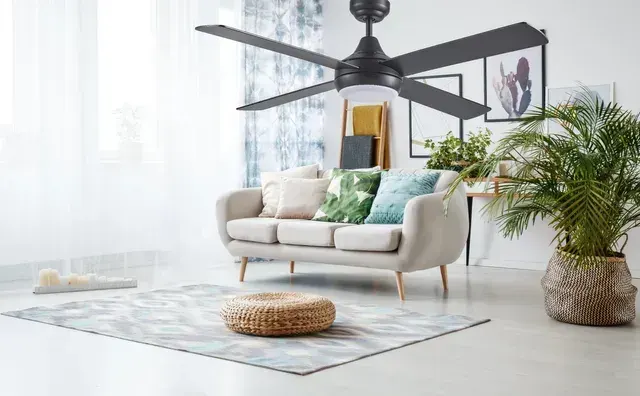
The short answer
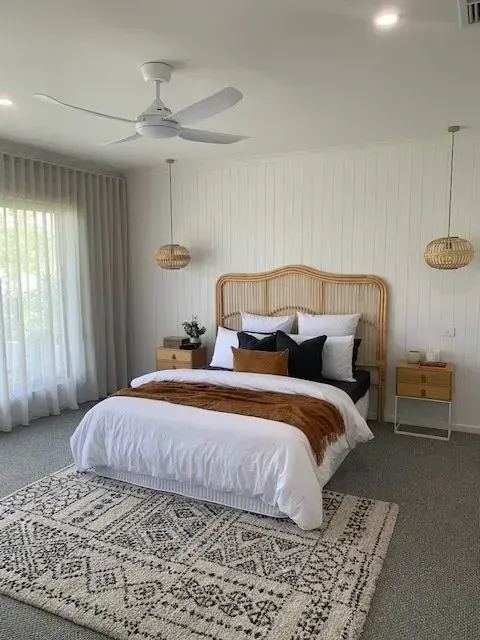
For a quiet bedroom, choose a DC ceiling fan sized to the room, and have it installed properly on a solid fixing. DC motors have little or no hum and a very gentle lowest speed, which is the speed you'll sleep under. A night or sleep mode, a timer and a dimmable warm light are the extras worth having.
What makes a ceiling fan quiet?
Fan noise comes from three places: the motor, the blades moving through the air, and anything loose or out of balance. A quiet fan deals with all three.
- A DC motor. DC motors are controlled electronically and run with little or no hum. Some AC fans hum, particularly on certain wall controllers.
- Balanced blades. Blades that match in weight and sit at the same angle run smoothly. A fan that wobbles will tick and rattle.
- Correct installation. The fan needs a solid fixing to the ceiling structure, with every screw tight and the canopy sitting clear of the ceiling. A loose mount passes vibration into the ceiling, where it sounds louder.
- The right speed. Air noise rises with speed, so the quietest fan is one that doesn't need to run fast. A fan sized correctly for the room keeps you comfortable on a low setting.
What size ceiling fan suits a bedroom?
Most bedrooms up to about 12m² suit a fan with a sweep of around 1050mm to 1200mm. Larger main bedrooms may suit 1300mm to 1400mm. Our ceiling fan size guide has the full chart and a calculator.
If you're between two sizes and have the clearance, the larger fan is often the quieter choice for sleeping, because it moves the same amount of air at a lower speed. Centre the fan over the bed where you can, and keep the blade tips at least 300mm from walls and wardrobe doors.
What is the best small ceiling fan for a small bedroom?
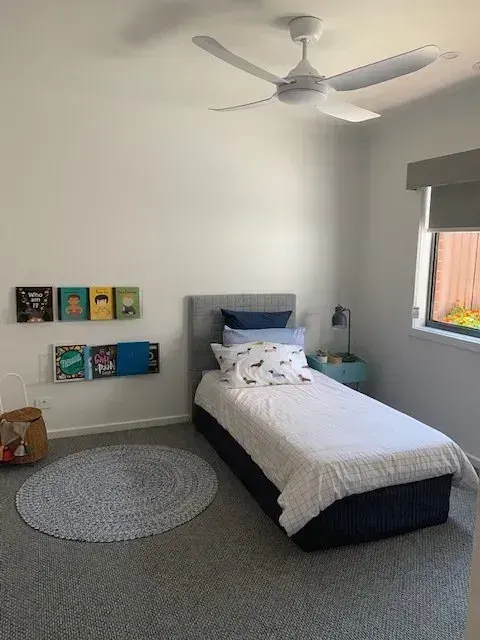
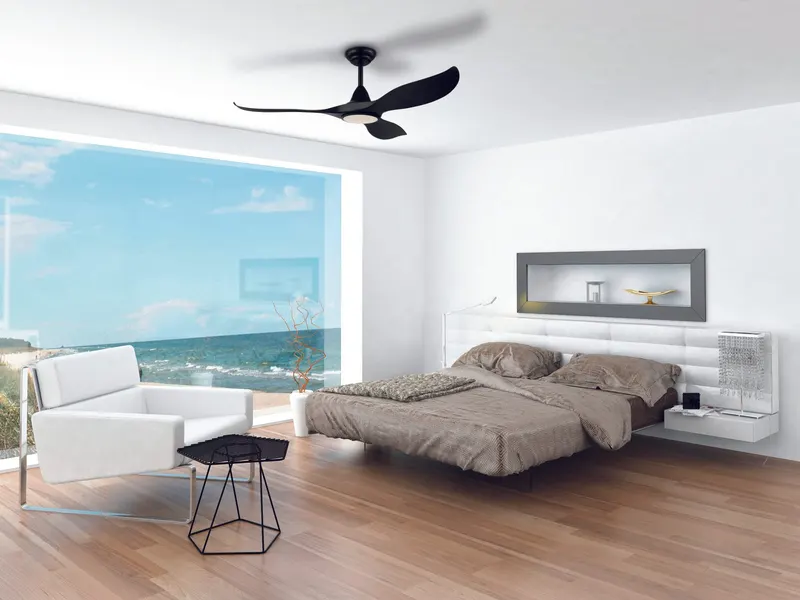
For a small bedroom, study or nursery, look at fans around 900mm to 1070mm. Small fans turn faster than large ones to move the same air, so the motor matters even more here: a small DC fan with five or six speeds gives you a far gentler low setting than a three-speed AC fan.
Check the clearance to the walls and to the top of any tall furniture, and keep fans well away from bunk beds and loft beds. A child on a top bunk should never be able to reach the blades.
What is a night or sleep mode on a fan?
It varies by brand, so ask what it does on the model you're looking at. On some fans, night mode is an extra-low speed below the normal lowest setting. On others, sleep mode changes the speed gradually over the night.
Here are some of the fans in our catalogue whose manufacturers state a night or sleep mode. They're listed alphabetically, not ranked, and there are others in the range. Ask us which are on display.
| Fan | Sizes | Stated mode | Also worth knowing |
|---|---|---|---|
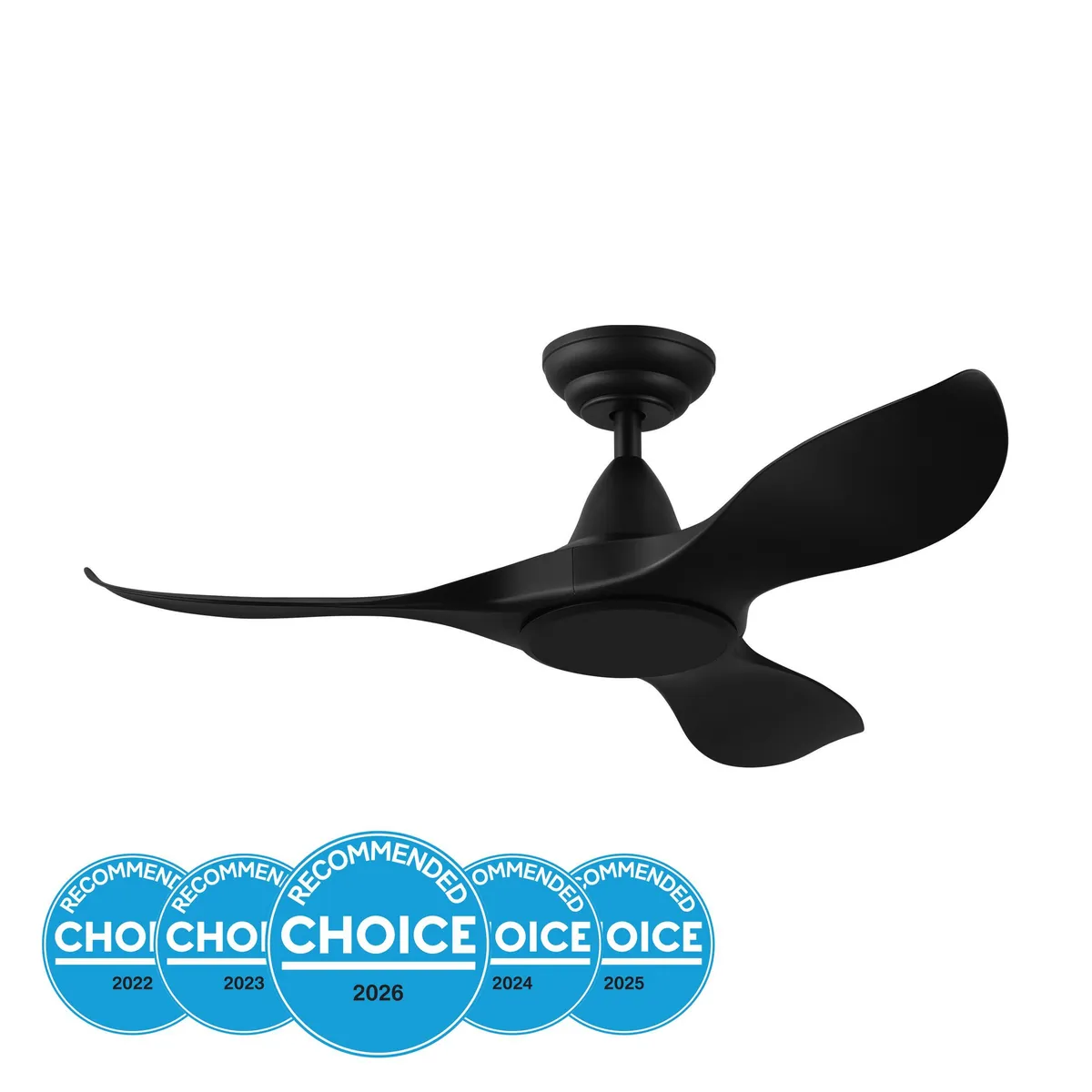
| Eglo Noosa DC | 40, 46, 52 and 60 inch | Super-low night mode | Six speeds and a timer. The 40 and 46 inch sizes suit bedrooms |
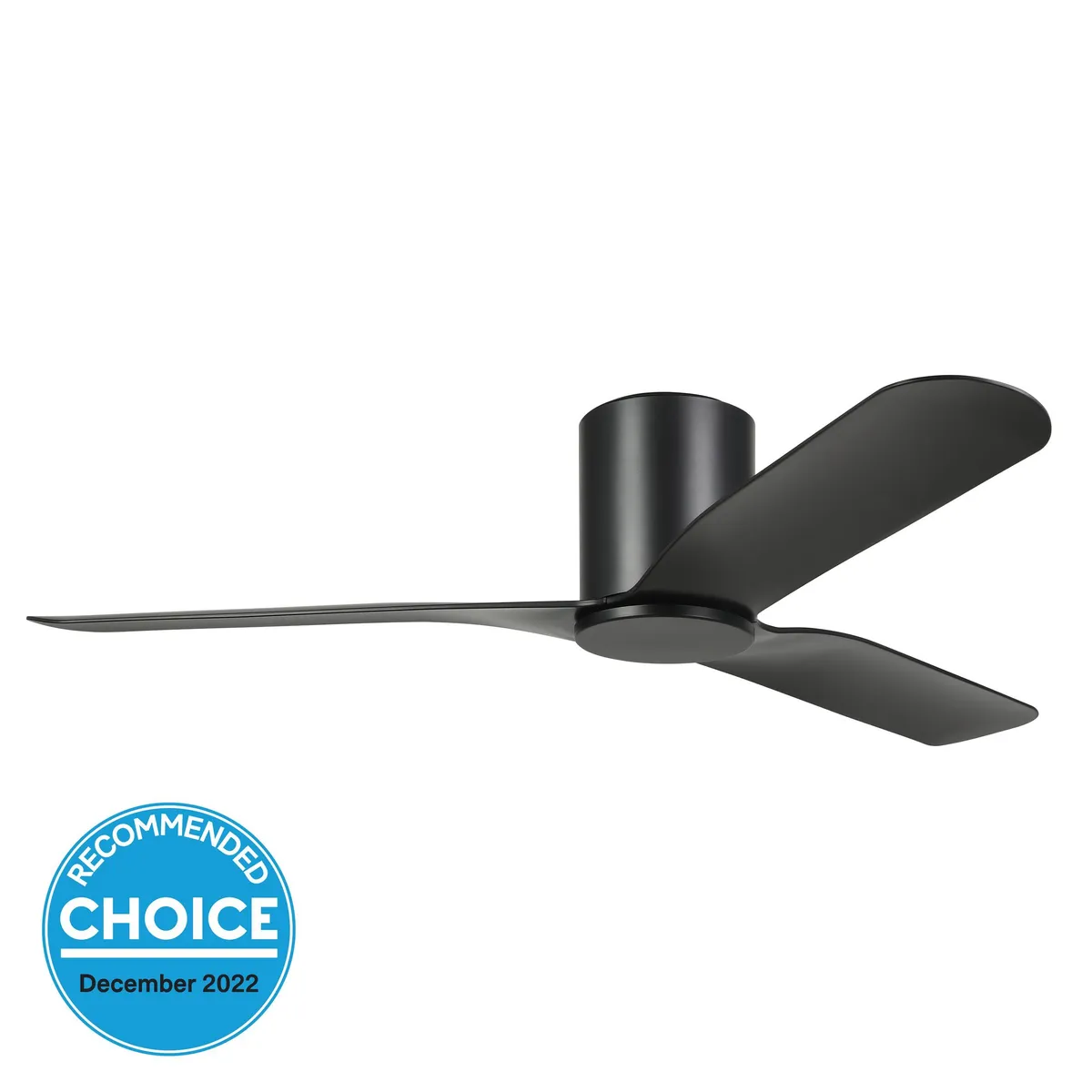
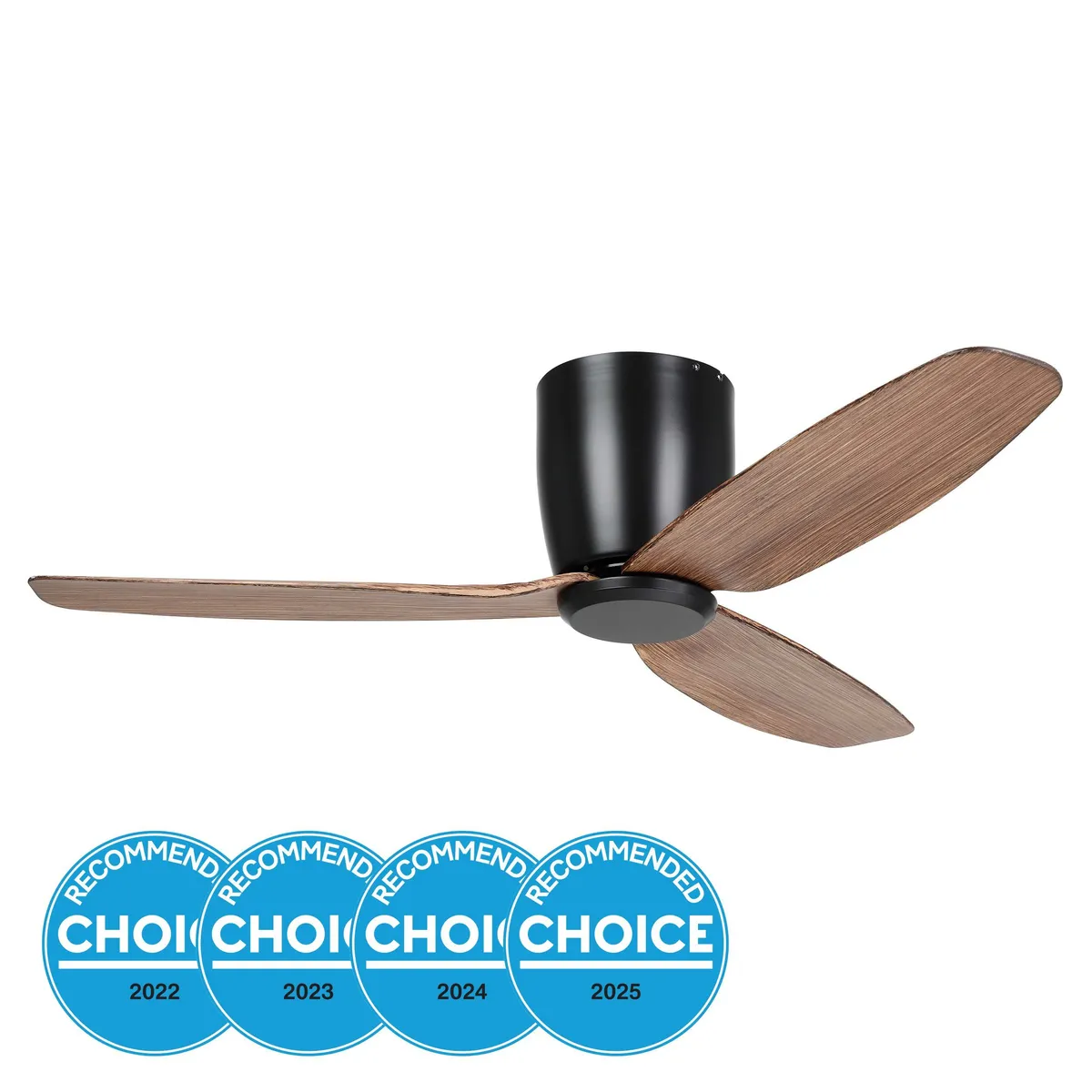
| Eglo Seacliff low profile DC | 44 and 52 inch | Super-low night mode | Sits close to the ceiling. Six speeds and a timer |
| Eglo Stradbroke DC | 48 and 52 inch | Super-low night mode on the remote | Six speeds and a timer |
| Martec Alpine DC | 1320mm | Sleep and breeze modes | Six speeds, remote and app control |
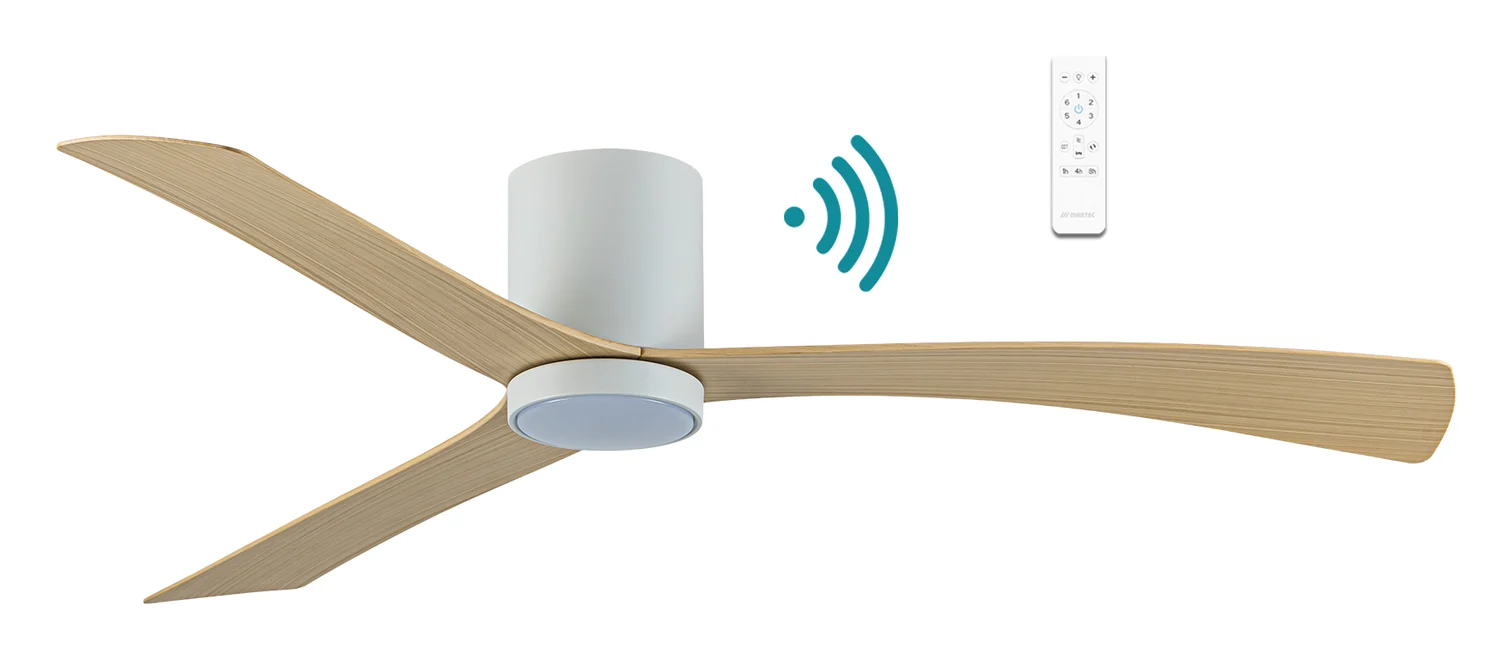
| Martec Metro DC low profile | 1320mm | Sleep and breeze modes | 210mm deep, for low ceilings. Six speeds, remote and app control |
Is a timer worth having on a bedroom fan?
Yes. A timer lets you fall asleep with the fan on and have it switch off by itself later in the night, when the house has cooled down. Most DC fans with a remote include one, usually with a choice of set periods of a few hours. Smart fans add schedules through an app, so the fan can turn on before bedtime and off before morning.
A natural or breeze mode is a matter of taste in a bedroom. It varies the speed to feel like a breeze through a window. Some people find it restful and others find the changes distracting, so try it in the showroom first.
Should a bedroom fan have a light?
If the fan is replacing the room's only ceiling light, yes. Look for two things. The first is dimming, so the light can be turned right down in the evening. The second is a choice of colour temperature. Many fan lights are tri-colour or have several colour steps, so you can set them to warm white, which is softer and more restful in a bedroom than cool white.
Check how the light is controlled as well. On most DC fans the light dims from the remote, not from a wall dimmer. If you'd like bedside lamps or wall lights for reading, the fan light only needs to cover general light for the room.
Do I need a low-profile fan for a 2.4m ceiling?
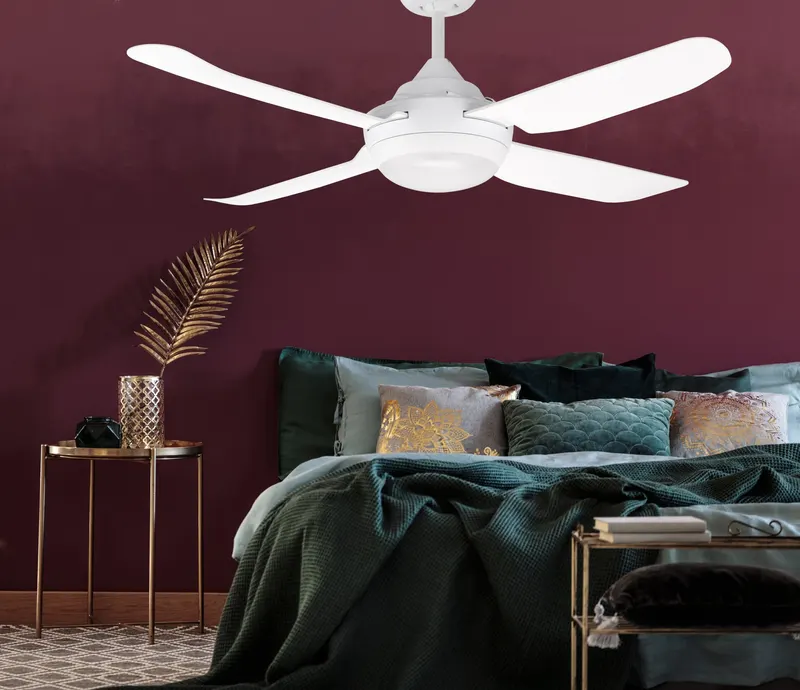
Often, yes. The usual Australian requirement is that fan blades sit at least 2.1m above the floor, and on a standard 2.4m ceiling that leaves about 300mm for the whole fan. A low-profile fan, also called a hugger or close-to-ceiling fan, mounts tight to the ceiling with no rod. That keeps the blades up out of the way, which is welcome over a bed.
A fan very close to the ceiling has a little less air to draw from above the blades, so it's worth comparing airflow figures between low-profile models. On ceilings of 2.7m or more, a standard fan on its supplied rod is usually the better choice.
Listen to them running in Albury
Noise is hard to judge from a specification sheet, and what one person calls silent another can hear. At Lighting Bonanza, on the corner of Dean and David Streets, Albury, we have ceiling fans from Martec, Mercator, Eglo and Calibo running on display, so you can stand under them on their lowest speed and listen. Bring your bedroom measurements and ceiling height and we'll help you narrow it down.