
The short answer
A ceiling fan is far cheaper to run than an air conditioner. In our worked example, a fan costs about 1c to 2.5c an hour and a small split-system about 28c an hour. The catch is that a fan doesn't lower the room temperature: it makes you feel cooler by moving air across your skin. On very hot days, use both, and set the air conditioner a few degrees higher.
Is it cheaper to run a ceiling fan or an air conditioner?
A ceiling fan, by a wide margin. A fan only has to turn a set of blades, which takes tens of watts. An air conditioner has to run a compressor to move heat out of the house, which takes hundreds or thousands of watts.
The two do different jobs, though, so it isn't a straight swap. The useful questions are how often a fan alone is enough, and how much less the air conditioner has to work when a fan is running with it.
How much does a ceiling fan cost to run?
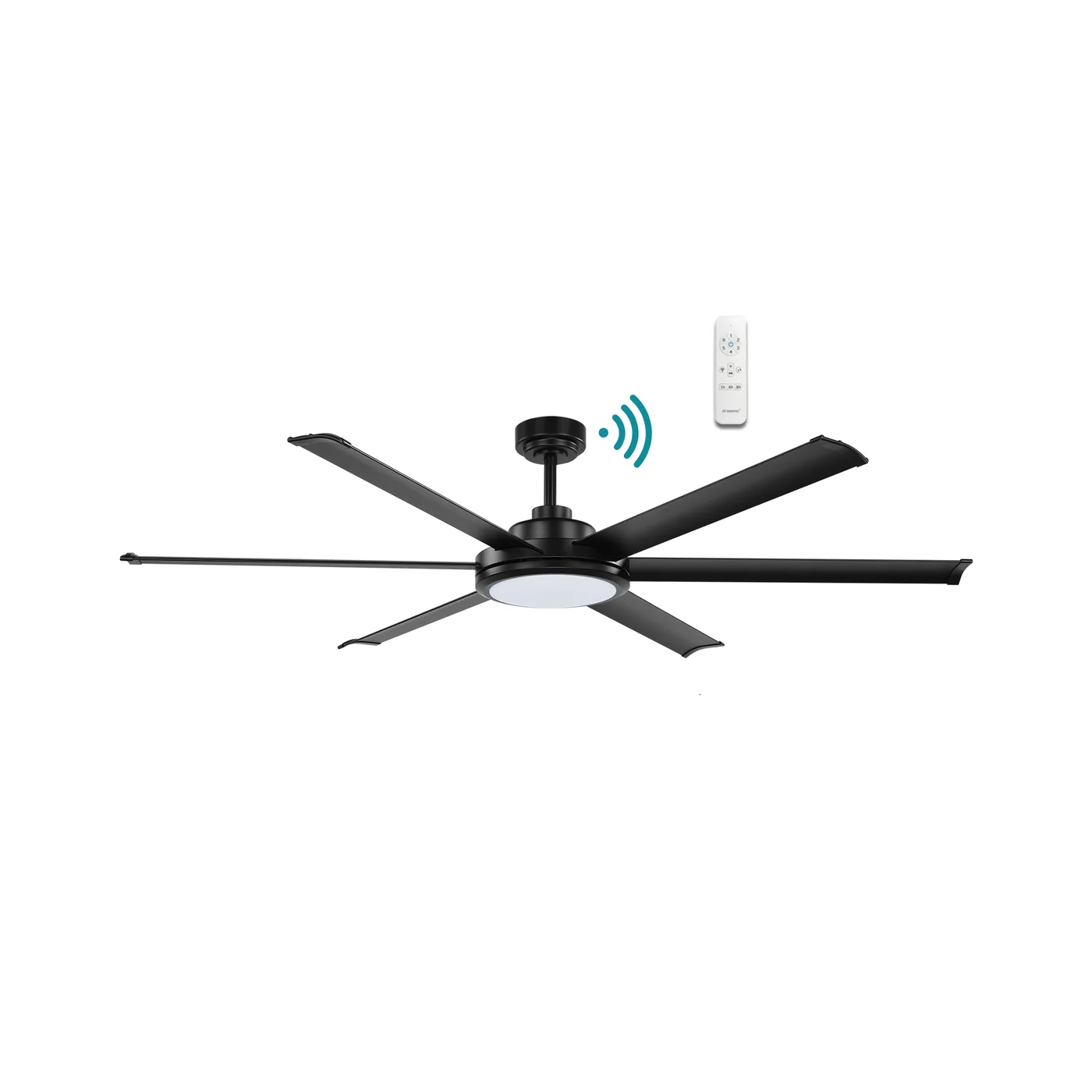
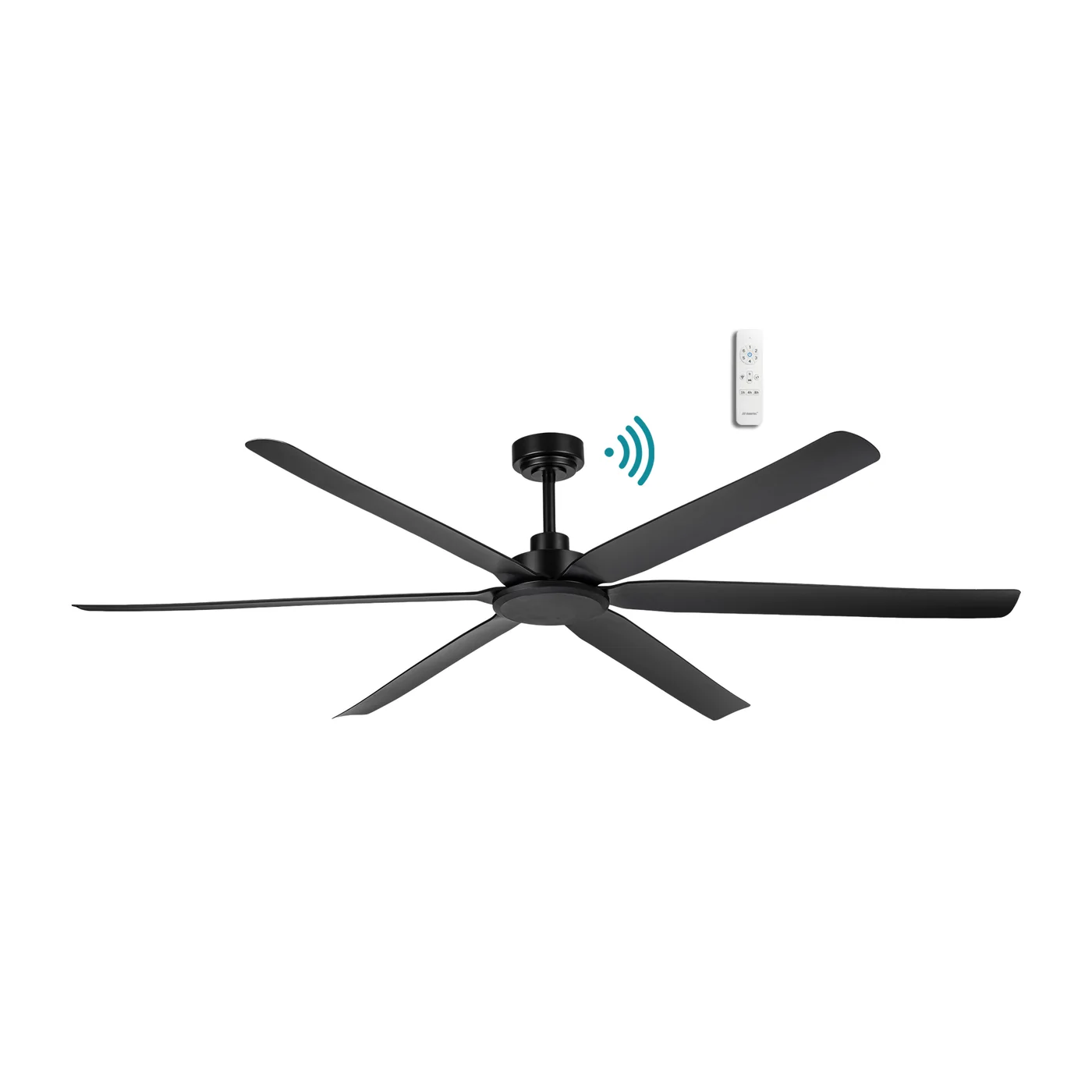
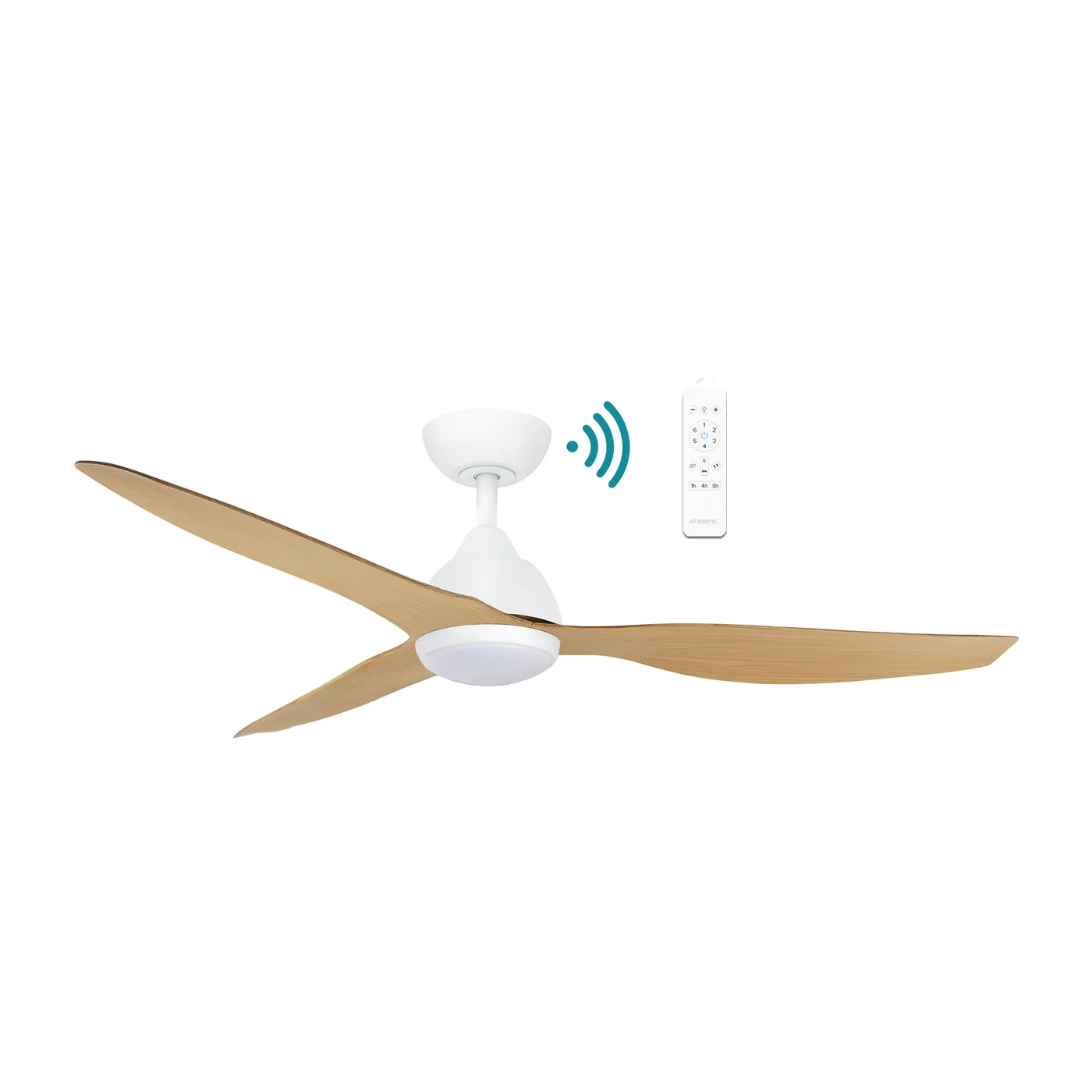
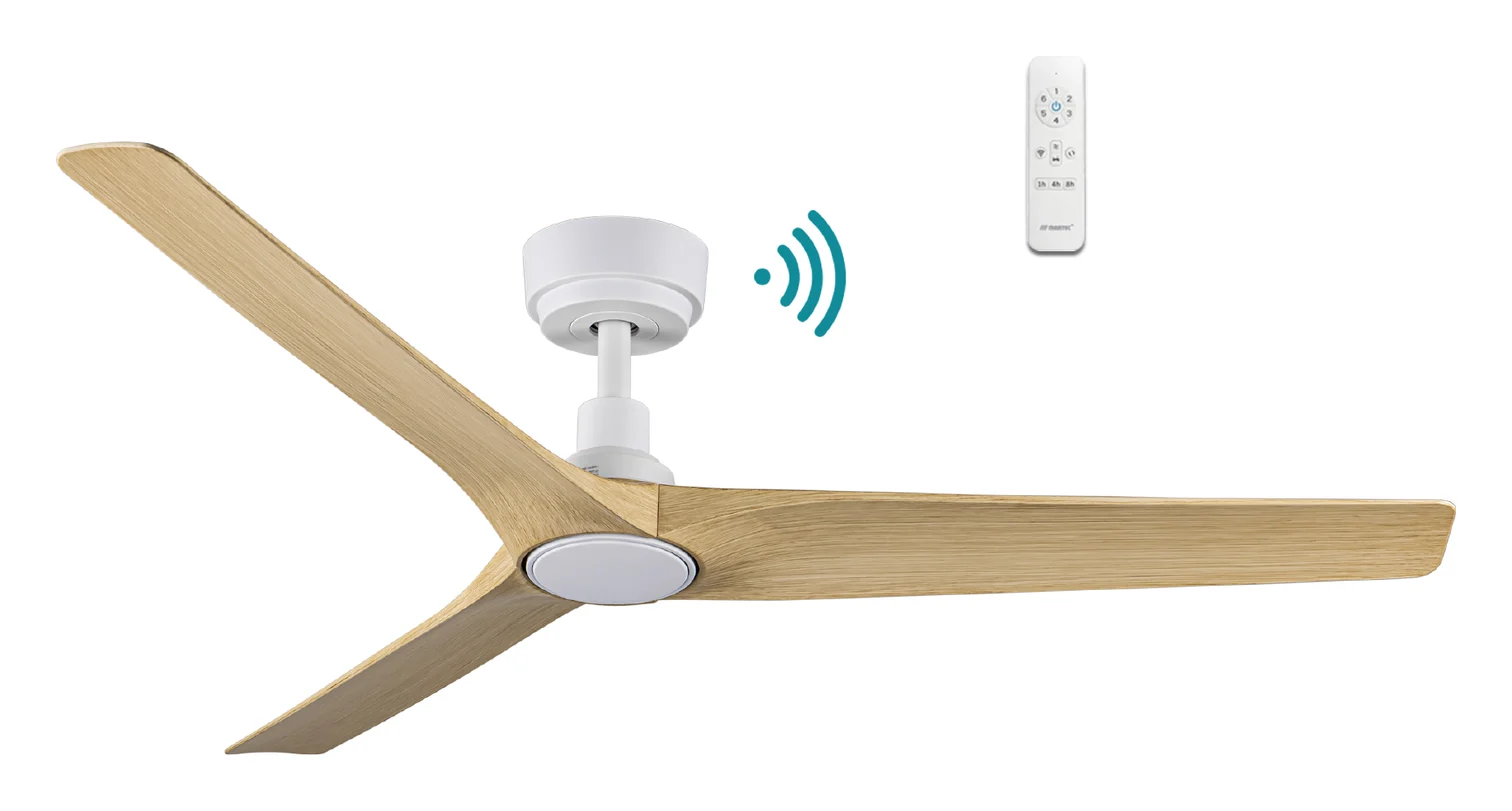
Running costs depend on the model, the speed you use and your electricity tariff, so treat this as a worked example, not a quote. We've used the same example figures as our DC vs AC guide: a 30W DC fan, a 70W AC fan and a small split-system drawing 800W while cooling, all at 35c per kWh.
The formula is: watts divided by 1000, multiplied by hours of use, multiplied by your price per kWh.
For the DC fan: 30 divided by 1000 is 0.03kW. One hour at 35c per kWh is 0.03 x 35c, or about 1c. For the AC fan: 0.07 x 35c is about 2.5c an hour. For the air conditioner: 0.8 x 35c is 28c an hour.
Over a summer of 8 hours a night for 90 nights, which is 720 hours: the DC fan uses 0.03 x 720 = 21.6kWh, or about $7.60. The AC fan uses 0.07 x 720 = 50.4kWh, or about $17.60. The air conditioner uses 0.8 x 720 = 576kWh, or about $201.60.
| Example appliance | Example power draw | Cost per hour at 35c/kWh | Cost over a summer (8 hours a night, 90 nights) |
|---|---|---|---|
| DC ceiling fan on a high speed | 30W | About 1c | About $7.60 |
| AC ceiling fan on a high speed | 70W | About 2.5c | About $17.60 |
| Small split-system air conditioner cooling | 800W | About 28c | About $201.60 |
How do I work out the cost for my own fan?
You need two numbers, and both are easy to find.
- Find the fan's wattage on its specification sheet or our product page. The figure given is normally for the highest speed, so lower speeds use less.
- Find the usage rate on your power bill, in cents per kWh.
- Divide the watts by 1000 to get kilowatts.
- Multiply by the number of hours you run the fan.
- Multiply by your rate. The answer is the cost in cents.
- For an air conditioner, use its rated cooling input power, not its cooling capacity. A unit described as 2.5kW of cooling draws much less than 2.5kW of electricity. Its actual draw also rises and falls with the weather and the thermostat setting.
Do ceiling fans actually cool a room?
No. A fan doesn't lower the air temperature. A thermometer in the room will read the same with the fan on or off. What changes is how you feel: air moving across your skin carries heat away from your body and helps sweat evaporate, so you feel cooler than the thermometer says.
That has two practical consequences. First, a fan only helps people who are in its breeze, so there's no point leaving it on in an empty room. Switch it off as you leave. Second, a fan has limits. Once the air is very hot, moving it around gives less relief, and that's when the air conditioner earns its keep.
Should I run the fan and the air conditioner together?
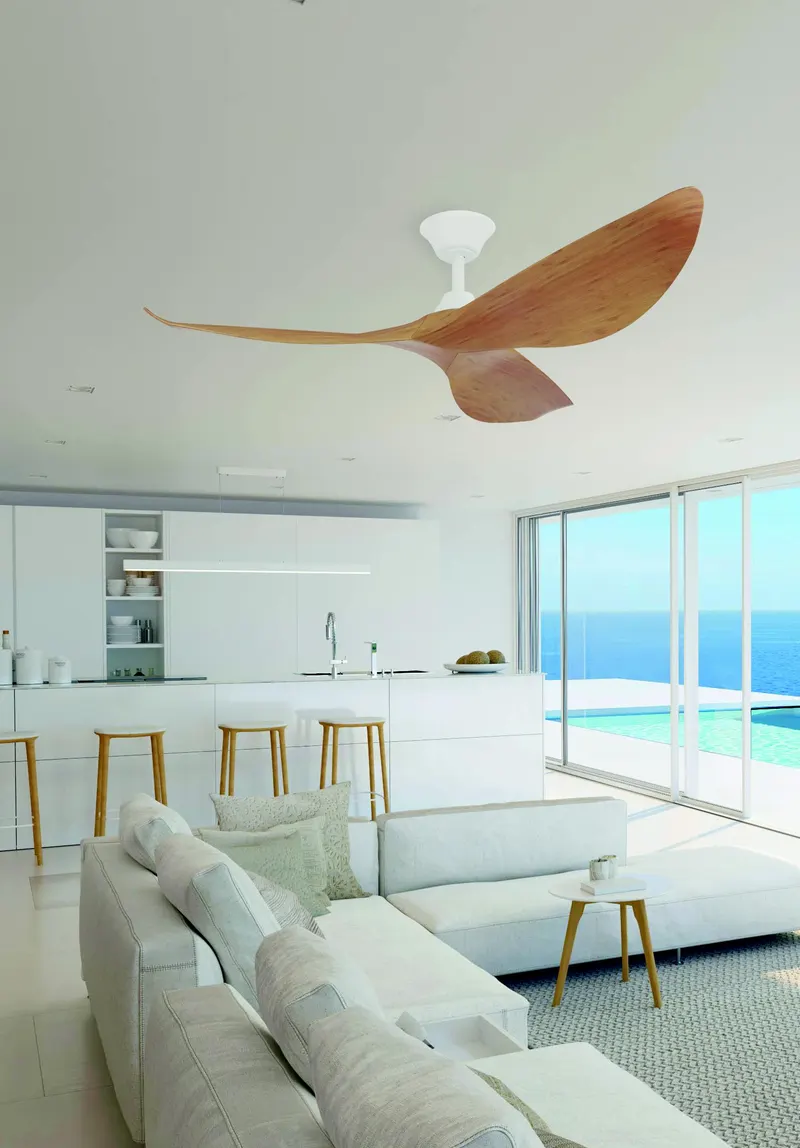
On hot days, yes. Because the moving air makes you feel cooler, you can set the air conditioner's thermostat a few degrees higher than you would without the fan and feel just as comfortable. An air conditioner that isn't cooling the room as far doesn't work as hard, so it uses less power.
The fan adds very little to the bill while it does this. In the example above, a DC fan adds about 1c an hour beside an air conditioner costing about 28c an hour. The fan also spreads the cooled air around the room, which helps in long rooms where the far end stays warm.
When is a fan enough by itself?
More often than you might expect. On mild and warm days, and on many Border summer nights once the evening has cooled off, a fan on a low speed is all most people need to sleep comfortably. Open the windows in the evening to let cooler air in, and let the fan move it through.
This is where the real saving is. Every night the fan runs in place of the air conditioner, the example difference is around 27c an hour. Over a summer of nights that adds up to far more than the difference between one fan and another.
Does the type of fan change the running cost?
Yes, though by less than the gap to an air conditioner. DC fans use less power than AC fans, and the difference in our example is about $10 a summer per fan. It grows with the number of fans in the house and the hours they run. DC fans also have more speeds, so it's easier to pick a setting that is just enough. Our DC vs AC guide covers the full comparison.
Size matters too. A fan that is too small for the room has to run flat out to be felt, while a correctly sized fan does the same job on a lower, quieter and cheaper speed.
Compare fans in our Albury showroom
If you're adding fans to cut down on air conditioner use, bring your room sizes to Lighting Bonanza on the corner of Dean and David Streets, Albury. We have fans from Martec, Mercator, Eglo and Calibo running on display, and we can show you the motor wattage and airflow of each one so you can compare them properly.