The short answer
In Australia, a hardwired ceiling fan must be installed by a licensed electrician. You can't legally do it yourself. The cost varies with the job: swapping a fan onto an existing light or fan point is the simplest, while a new point, new wiring, a high or raked ceiling or a new wall control all add time. Get a quote for your own home, and ask us if you need the name of a local electrician.
Do you need an electrician to install a ceiling fan?
Yes. A ceiling fan is wired into your home's fixed wiring, and in Australia that work must be carried out by a licensed electrician. This applies in both New South Wales and Victoria, so it's the same answer on either side of the Border.
It applies even when you're replacing an old fan with a new one on the same wires, or swapping a light fitting for a fan. Your electrician will also test the work and give you the compliance paperwork for it, which is worth keeping with your house records.
Can I install a ceiling fan myself in Australia?
No, not the electrical work. Connecting, disconnecting or altering fixed wiring without a licence is illegal, and it can be dangerous for you and for whoever works on the house next. It may also cause problems with the fan's warranty and your home insurance, so check both before you consider it.
There is still plenty you can do yourself: choose the fan, measure the room and ceiling height, decide where it will go and how you want to control it, and have the fan on site and unopened when the electrician arrives. Some electricians are happy for you to assemble the blades beforehand. Ask first.
How much does it cost to install a ceiling fan?
We don't publish installation prices, because electricians set their own rates and the price depends on the job. Two fans of the same model can cost quite different amounts to install in two different houses.
The main question is whether there is already a suitable point where the fan will go. From there, the things in the table below move the price up or down. An electrician can usually give you a firm quote once they know these details or have seen the room.
| What affects the price | Simpler job | Bigger job |
|---|---|---|
| Existing wiring | Replacing an existing fan, or a light point that already has suitable wiring | A new point where there has never been one, with new cable run from the switch |
| Ceiling support | Solid fixing already in place above the ceiling | Extra timber or bracing needed to carry the fan's weight and movement |
| Roof space access | Single storey with a roof space the electrician can get into | Lower floor of a two-storey home, flat roof or no roof space |
| Ceiling height | Standard flat ceiling reached from a step ladder | High ceilings that need taller ladders or scaffolding |
| Ceiling shape | Flat ceiling | Raked ceiling that needs an angled mount and an extension rod |
| Control | Remote control supplied with the fan | New wall control, extra switch wiring, or separate switching for the fan and its light |
| Number of fans | Several fans installed in one visit | One fan on its own visit |
What should I have ready for a quote?
The more your electrician knows before they arrive, the more accurate the quote. Photos help a lot. Have these ready when you call.
How high does a ceiling fan need to be?
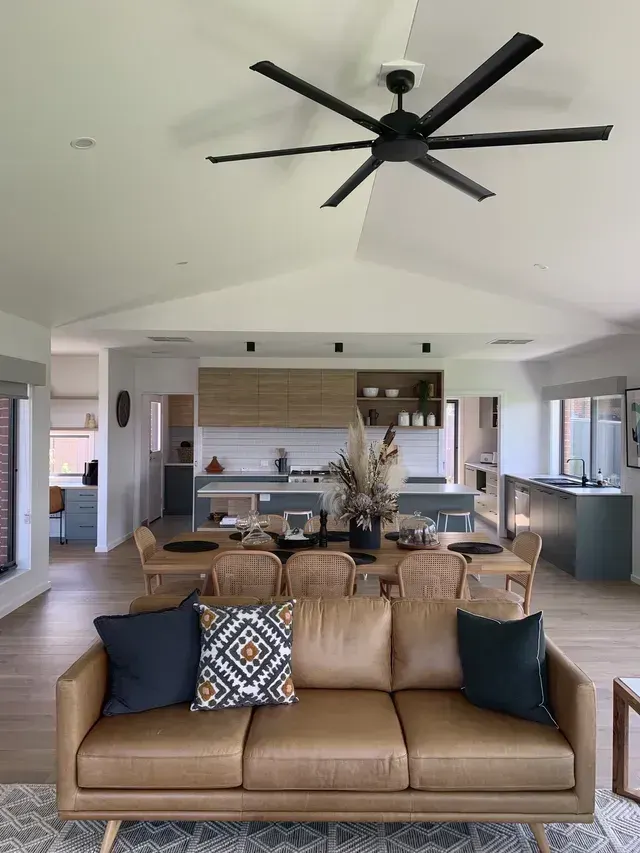
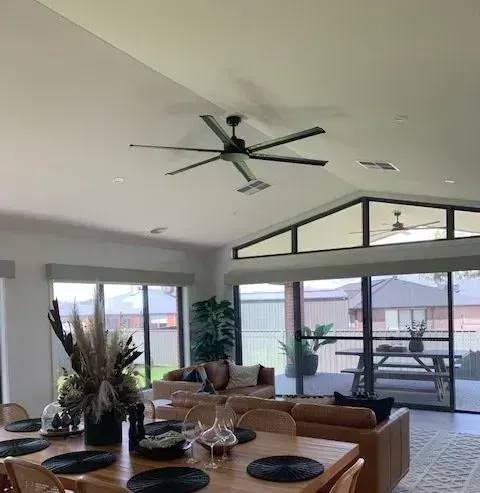
The usual Australian requirement is that the blades sit at least 2.1m above the floor. Your electrician will confirm what applies to your installation. On a standard 2.4m ceiling that leaves little room to spare, so choose a low-profile fan or use the shortest rod supplied with the fan.
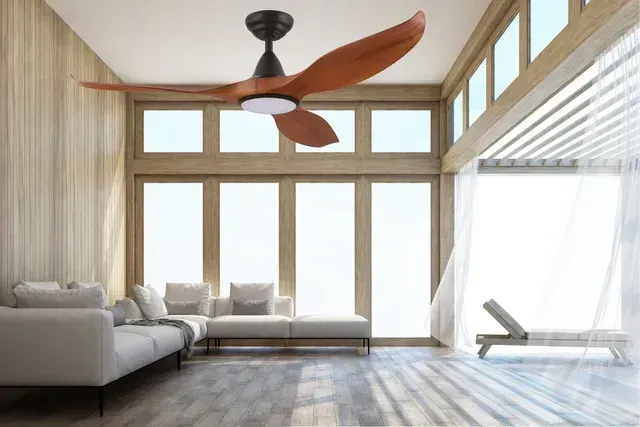
On high and raked ceilings the problem is the opposite. A fan mounted too high moves air you never feel, so an extension rod brings it down to a useful height. Raked ceilings also need a mount that suits the angle of the ceiling. Fans differ in the maximum angle they can handle, so check the specification before you buy.
How much clearance does a ceiling fan need?
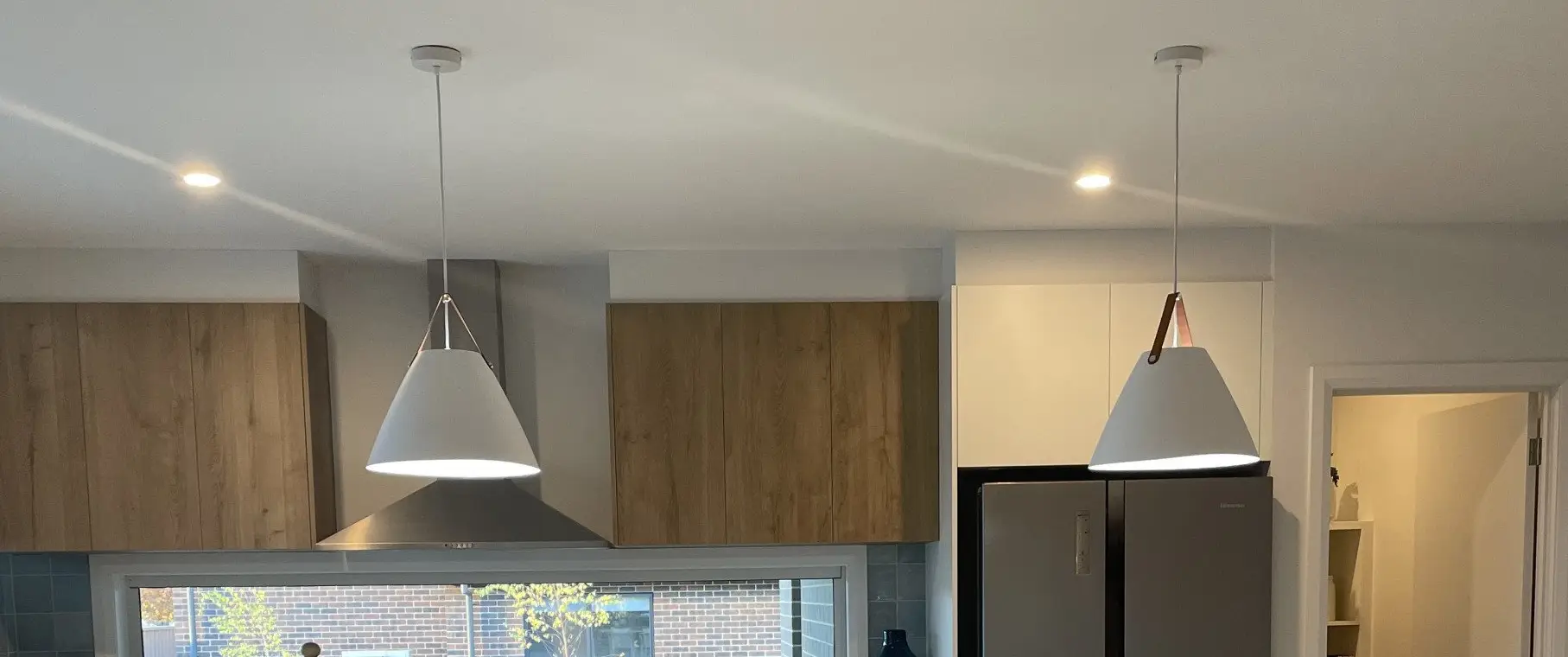
As a rule of thumb, keep the blade tips at least 300mm from walls, beams and bulkheads. A fan that is too close to a wall moves less air and can wobble in its own turbulence. Keep it clear of wardrobe and cupboard doors, loft ladders, bunk beds and pendant lights as well.
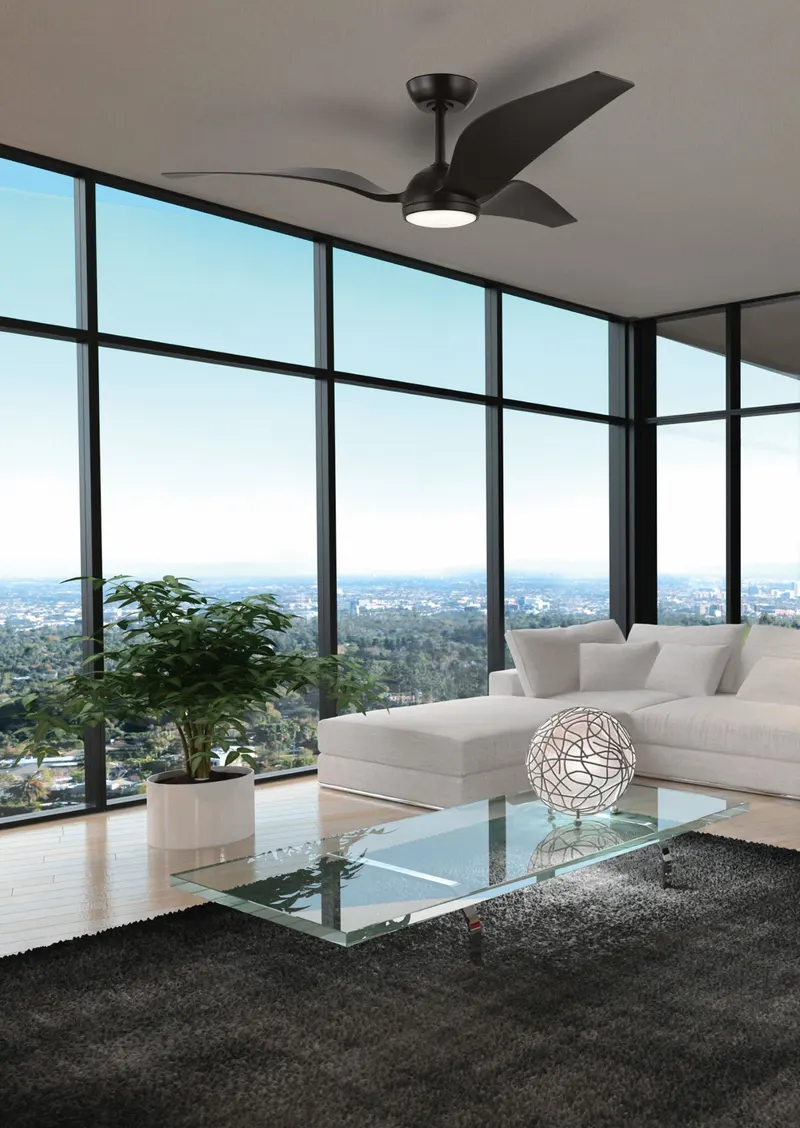
Try not to place a fan directly under a downlight. A light shining through moving blades flickers like a strobe, which is tiring in a room you sit in. If the best position for the fan is under an existing light point, a fan with its own light is often the tidy answer.
Wall control or remote: does it change the installation?
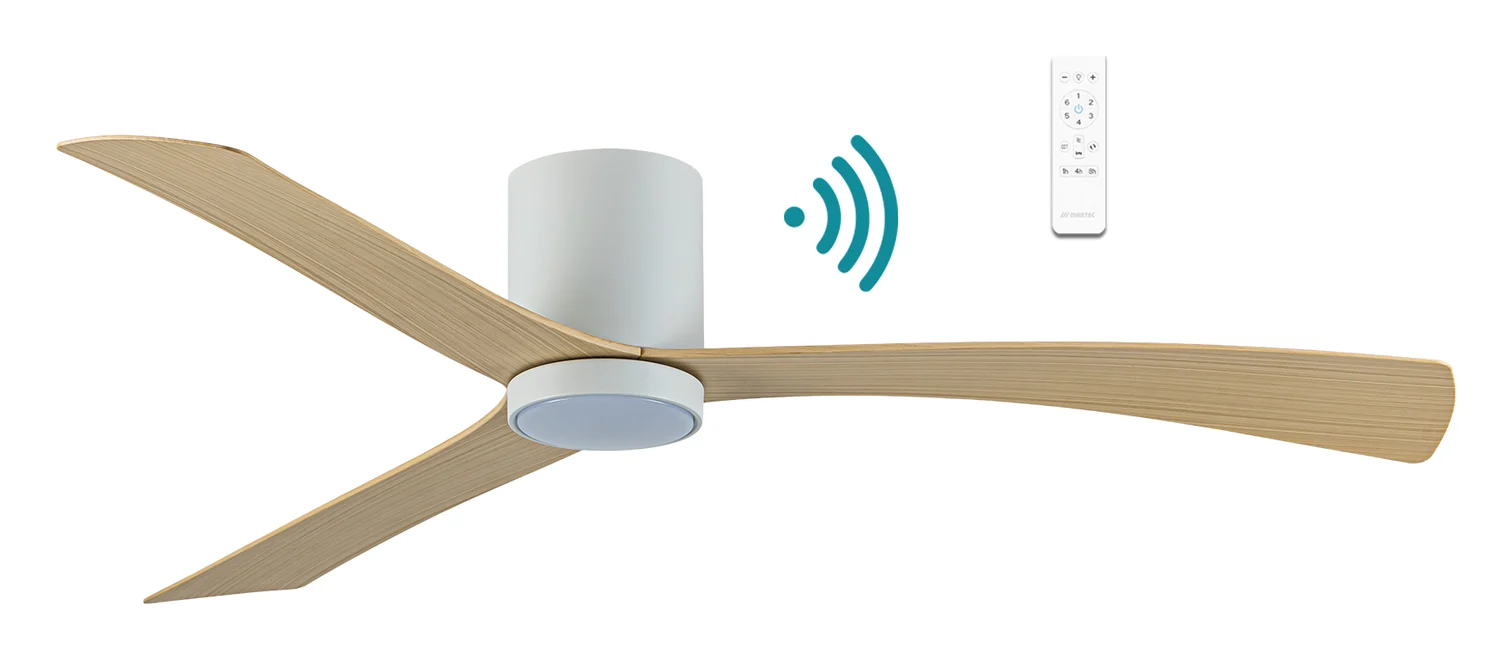
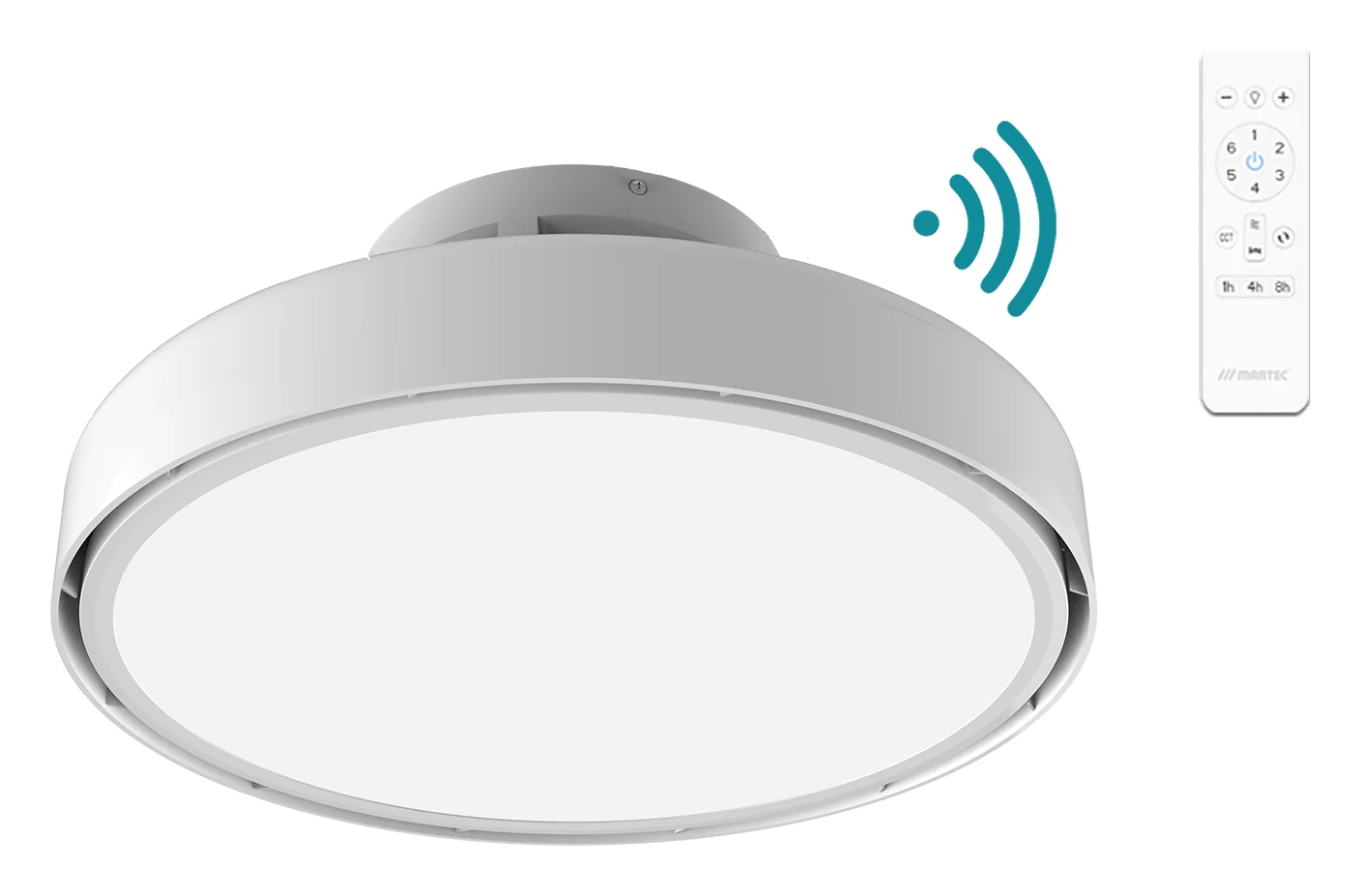
It can. Most DC fans come with a remote and need only power at the ceiling, which makes them straightforward on an existing light point. A wall control may need extra wiring between the switch and the fan, depending on the model and what is already in the wall.
If the fan has a light and you want to switch the light and the fan separately from the wall, mention it when you ask for the quote. It's much easier to plan for at the start than to add later.
Need an electrician in Albury-Wodonga?
Lighting Bonanza is a showroom, so we don't install fans ourselves, but we work with most local electricians and can point you to one. Choose your fan first at our showroom on the corner of Dean and David Streets, Albury, where fans from Martec, Mercator, Eglo and Calibo are running on display. Bring your ceiling heights and a few photos, and we'll help you pick the right fan, rod and control so the electrician has everything on the day. You can also call us on 02 6021 8814.